Archive for the 'Music' Category

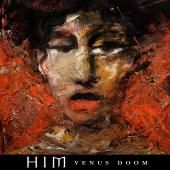
HIM – Venus Doom

Topic: Reviews, Music| No Comments »

Venus Doom is the 6th studio album from Finland’s most commercially successful gothic metal band. The reason for that success is simple enough. They write and perform reasonably catchy tunes with lyrics that resonate with both a traditional goth and teenage audiences. Love and death have always had a certain popular appeal.

HIM

It does no harm that Ville Vallo, the leader singer, is an undoubtedly handsome chap oozing the dissolute elfin charm of a latter day Marc Bolan and armed with a crooning baritone voice that lends the lyrics a sometimes unworthy gravitas.

The album consists of 9 new studio tracks and limited editions also feature 2 live tracks lifted from their previous album.
The previous album, Dark Light, was a commercial success and help HIM break into the big time in the US. It was however regarded as something of a sell-out by long standing fans. Venus Doom seeks in part to redress that and is a slightly less commercial affair with a decidedly heavier vibe and a number of Black Sabbathesque riffs and rhythms.

However, this slight change in musical tone is little more than icing on the cake as the central issue with the album is a lack of ambition. Despite a few hints in the direction of a greater band based performance the structure of all 9 songs remains firmly around Vallo’s singing. This isn’t a bad thing per se, as the guy can definitely sing, but when the lyrics appear to be popped out of the little book of gothic romance it is hard not to do a checklist in your head. Tortured love – tick, weeping – tick, vampires – tick…
The list of song titles should give a flavour of what I am getting at.
1. Venus Doom 2. Love In Cold Blood 3. Passion’s Killing Floor 4. Kiss Of Dawn 5. Sleepwalking Past Hope 6. Dead Lovers’ Lane 7. Song Or Suicide 8. Bleed Well 9. Cyanide Sun

Setting the lyrics to one side, the music is universally well played and despite “the stop the tune it’s time for Ville to sing” style structure of most of the songs, there are a number of excellent instrumental sequences. Where it goes wrong is in leading the listener to think (from the first 30 seconds or so) that the song is going to be a real rocker with grinding guitars, but then suddenly mellowing. That might be a neat trick now and then, but when it’s the only one you have it becomes a bit wearing.
Consequently, despite being a pretty light-weight album by modern standards with only 45 minutes of new material, the album is quite long enough.

Two tracks stand out from the rest and offer something a little weightier than the gothic pop metal that makes up the rest of the album. Track 2 – Love in Cold Blood starts at a modest pace but bursts into life about half way through and ends with a pretty nifty instrumental sequence. This is also true of track 5 – Sleepwalking Past Hope which is over 10 minutes long and represents the only track which demonstrates any real ambition beyond the desire to appeal to a teenage gothic rock dance club audience. All in all, this is a good album but with the band’s success, there was the opportunity for something far grander, far more ambitious than what they’ve ended up producing. Good, but it could, and should, have been better

Discuss this topic here.

Amplifier

Topic: Reviews, Music| No Comments »

CD Title: Insider
Publisher: SPV

Amplifier are three-piece band based in Manchester and they play complex, progressive heavy rock with a modern spin. Imagine for a moment Tool playing Rush songs and you might have a clue about the tone and style of the songs.

The album opens with the instrumental Gustav’s Arrival in a tune heralded by Sci-Fi stereophonic sequencer/keyboard effects that wouldn’t sound out of place on a Pink Floyd album then the guitars and drums kick in and you know you are in for a rockier ride. The production and sound quality are deliberately muddy with a backdrop of drum, bass and rhythm guitar that becomes a wall of sound over which the melodies, carried by muted vocals and guitar licks, are played out.

O Fortuna, with its complex time signature and stop start rhythm is a challenging track to start the album proper and it is not until the next track Insider that the bands ability to play complex but genuinely melodic rock music is properly demonstrated.

Mongrel’s Anthem starts like a track from Live and continues in a swirl of drums and speaker-fuzzing guitar riffs. This pattern is repeated on R.I.P..

Fortunately Strange Seas of Thoughts breaks away from this model, slightly, and delivers, along with Insider perhaps the strongest track on the album with its sing-along tag line ‘Is there anybody out there?’ and its rolling groove.

After that Procedures begins, again with hints of Pink Floyd, with the sounds of an old-style typewriter tapping out a tune that is then joined by guitars, bass, and drums but it soon returns to the by now standard Amplifier soundscape.

And therein lies the problem; while individual tracks are good, and there are even a couple that do genuinely stand-out, the muddy production, the muted vocals and the guitar/bass and drum ‘wall of sound’ eventually become homogeneous and frankly a little dull.

Don’t misunderstand; there is nothing wrong with a band having a distinctive sound. Pink Floyd always sound like Pink Floyd, Rush always sound like Rush but their songs challenge the listener and the artist, providing a rich and diverse mix of tunes, tempos and lyrical musings. Amplifier, on the other hand, seem content to retread their single trick. They’ve arguably honed their craft a little since their eponymous debut album from 2005, but even though it is wrapped up in booming baselines and swirling drums, the album as a whole remains a paltry and unsatisfying offering. Like some gigantic desert made from Chocolate mousse, it might look tempting on the menu, but after a few bites you realise that you’ve had enough.

The beauty of the modern age is that anything can be bought as if it were a single and in that case I’d advise downloading The Insider and Strange Seas of Thought from iTunes or the like, the rest, unless you are a die-hard fan, can probably be lived without.

Discuss this topic here.

The Killers: Sam’s Town

Topic: Reviews, Music| No Comments »

Label: Island Def Jam
Producers: Flood and Alan Moulder

The new album by the Killers, Sam’s Town has the Las Vegas group reinventing itself from being a faux New-Wave band to a faux E Street band. Oddly enough, this is not the worst thing in the world. In fact, Sam’s Town is a very fun album that displays the greatest skills of the Killers, a group of romantic chameleons capable of using a very different style while keeping to their own sound.

The first thing that should be said right away is that Sam’s town does nothing that hasn’t been done. It is a bit of a concept album. It has moments that sound like Bon Jovi and Springsteen during their most popular moments. It has an intro and epilogue track. The Killers are interesting is that they peddle to a certain music nostalgia and what they peddle is figurative reinterpretations of classic moments in rock. They are very effective in their mission of putting out an album dedicated to a visceral rock experience.

The songs are very catchy and easy to listen to. That may have something to do with band leader Brandon Flowers being able to pronounce and carry a tune and realizing his limitations to his style. The songs themselves are very simple, universal tunes that are guaranteed hits that one would have a difficult time feeling guilt for liking, a collection of happy affairs filled with romance, whimsy and quiet machismo.

The production by Flood and Alan Moulder does a great job of enhancing the vocal for clarity and making the instruments distinct. Crucially, the producers know when to take a back seat, with songs like ‘My List’ involving little more than them just letting the band play.

Another thing about Sam’s Town is that certain tracks like “When You Were Young” and “Bling” sound great because The Killers have no shame or fear about where they come from amd in a way, the album is a love song about Las Vegas. Sam’s Town is lacking in nuance, or quick tricks, and it is earnest about its goals and limitations. It wants to be the best Rock album ever and every song feels like it can be just that.

The definition of what could be a best rock album is open to interpretation, but Sam’s Town has the potential to be a fun, whimsy filled album that over the next ten or so years will be liked, although not necessarily loved, by most listeners. It’s a mainstream rock album that wears its influence and intentions on its tracks and if one does not demand much it delivers a simple yet fun group of songs.

Discuss this topic here.

Get Cape. Wear Cape. Fly

Topic: Reviews, Music| No Comments »

Title: The Chronicles of A Bohemian Teenager
Artist: Get Cape. Wear Cape. Fly
Label: Atlantic
Publisher: Warner Music UK
Price: £9.99

Get Cape. Wear Cape. Fly (GCWKF), or Sam Duckworth as he was christened, takes his name from the sub headings that were used in a review of a Batman computer game. In my mind that’s a good start since it speaks at least of some kind of sense of humour. I first came across his music, recorded predominantly alone using just an acoustic guitar and a laptop, on Radio 1s late night/early morning weekend show The Blue Room. It’s a kind of contemporary folktronica I suppose, but lacking most of the pretension such a title would suggest. Since this initial encounter, I’ve been awaiting his album with some trepidation, hoping that his interesting take on folk would carry successfully to a full length format. On the whole I think it does.

The album opens to Once More With Feeling, a gentle tinkling guitar number with some introspective, but optimistic lyrics about surviving the sense of judgment and isolation that can sometimes permeate modern life, especially for the young. The second track, An Oak Tree picks up the pace a bit, with the guitar accompanied by some nice trundling backbeats and keyboards. The lyrics are again reflective, covering modern themes of rapid change, personal failure, and rebirth, but once again they stay optimistic; the main message being “I guess another set back is just another lesson learnt”. This is followed by the title track and current single, which if you’ve heard will give you an idea of what to expect. It’s a neat mixture of Duckworth’s acoustic, computer beats and live strings. The subject is the continuous questioning, self pity, and inability to escape that all young people feel at some point. Again the topic could be pretty depressing but Duckworth manages to make the overall message one of possibility rather than tragedy. He also manages to squeeze in the line “Would there be a second chapter if they didn’t leave the death star alive?”, which earns him some massive brownie points from me.

The next song, and other single, I-spy, is in my opinon one of the weakest on the album, effectively being about the value of a simple sing-along over needless complexity; which, while I agree with as a message, just sits uncomfortably on an album carrying, for the most part, songs tackling complex themes. The Lighthousekeeper slows the pace down again and an acoustic only number about having the courage to leave the comfort of your home town, but understanding the value of being able to have such a home to return to. War of The Worlds is another fairly weak song for me, there’s not much going on tune wise and the topic is pretty much standard break up fair. Get Cape. Wear Cape. Fly is an anti-consumerist song about resisting the need to need. It’s not actually a badly written song given the political overtones and the beat on it is pretty nice. I however, like others, have some difficulty swallowing an anti-consumer message packaged within a consumer product, published by Warner. I’m pretty sure Duckworth believes in his message, I’m just not sure he appreciates the irony of the way he chose to deliver it.

Glasshouses is a statement on racism and prejudice, which like much of the stuff here is delivered in a surprisingly mature and believable tone given Duckworth’s tender years. The standard acoustic here is embellished with a piano, not real I think, and a cornet, real life instrument; both to excellent effect. Whitewash is Brainwash is another critique of modern conformity and consumer culture. Once again it’s a touch hypocritical, but it’s written well and it makes some pertinent points; “Our TV sets are drenched in Pseudo reality….12 unkowns light up 7 million homes, whilst the news at 10 is barely watched as it’s the same old war again”.

The last three songs on the album are, in my mind, some of the strongest. They seem to be the ones that manage to merge Duckworth’s lyrics with musically worthwhile tunes and not have either facet lose out. Call Me Ishmael is a an uplifting call to look beyond our daily grind for meaning, something we all spend most of our life doing. If I had £1 for every Stale Song title I’d still be 30 short of getting out of this mess is a strike out at Duckworth’s critics, but at the same time is about realising that all criticism is subjective; do what you believe in. The final track, also the title track, is about understanding the value of friends and that moving on isn’t always moving forward.

Chronicles of a Bohemian Teenager is basically what it says on the front cover, the experiences of a young man growing up in a modern, difficult world. It could, given that, all sound terribly whiny in a teenage fight the system style, and while its true that he doesn’t supply solutions only critique, Duckworth presents his subject matter intelligently, perceptively and in such a matter of fact way that you’re forced to basically just appreciate his observations; not least of all because you share most of them and you haven’t fixed many of the worlds wrongs recently yourself. A number of reviewers have said that the album sounds a bit samey, and that Duckworth is something of a one trick pony. I didn’t see it myself, obviously there’s a running theme and style, but that’s true of most artists. If I have one criticism of the album it’s that his voice doesn’t always hold up, sounding just too raw at times. To sum up I found this a well observed, musically interesting journey through modern life, and more than worth a listen.

Discuss this topic here.

The Automatic

Topic: Reviews, Music| No Comments »

Coming Soon

Discuss this topic here.

Muse: Black Holes & Revelations

Topic: Reviews, Music| No Comments »

Producer: Muse/Rich Costey
Publisher: WEA
Price: £11.99/$15.99

Black Holes and Revelations is Muse’s fourth album, and certainly their most ambitious musically. Having started life as something of a poor man’s Radiohead, Muse have evolved over the course of their album releases, and by the time Absolution was released had managed to find a sound distinctly their own; one that took some of those Radiohead-type sensibilities and fused them to more theatrical song construction and prog-rock stylings. The result was surprisingly good, on this album however they take that theatre to a whole new level.

The album opens with a gentle tinkering of electric organ, a darker bass organ creeps in and then the vocal kicks in. It’s notable that some of the high pitched wine has gone from Bellamy’s voice on this album and the result is a much smoother affair, which I personally felt was a progression for the better. About 2 minutes 30 into this first song, called incidentally Take a Bow, you actually hear a guitar. It’s not however very thrashy. It doesn’t have bite. It has…scope. The whole track is terribly epic in fact, and that’s no bad thing. The bad thing is that it never really seems to kick off. There’s a build up of tension, but there’s just never any release of it, by the end you feel somewhat crushed by the oppressiveness of it. Lyrically it’s all a bit too political for me as well. I get bored enough hearing people on the news whitter on about when Blair will resign, the last thing I need is my musicians doing that for me as well.

As you can tell the opening track of this album didn’t do much for me, actually I routinely skip it now whenever I listen to the album. Things however pick up from here on in. The second track, the title track Black Holes & Revelations, is a very poppy affair. A terribly catchy piano hook, which somewhat reminded me of 80’s British dramas like Howard’s Way, plays over stamping rhythmic drums, Bellamy’s vocals roll nicely over the top, and there’s an occasional release of energy as the band even get to thrash their guitars a bit. This is followed by the single Supermassive Black Hole, which can only be described as a down and dirty funk record. The drum machine beat sounds like….well Prince, and to some extent so does the vocal on this track. Admittedly there’s a fairly industrial sounding grimy guitar riff through it all, but this track has a lot more in common with disco than it does metal. Personally I don’t mind that, but I can’t help feeling a large number of Muse fans are going to be thinking WTF!.

Sadly for those people, the next track Map of the Problematique will probably solicit a similar reaction. It sounds somewhat like a Parisian House track merged with some industrial guitar riffs. There are hints of Depeche Mode, there are even hints of Nine Inch Nails at times, and as a song I think it’s actually pretty damn good, but I know a lot of rock fans will definitely not agree. It also suffers somewhat from the same problem as Take a Bow, insofar that there is a massive build up of tension here that never really gets released, it just ebbs away leaving the listener a bit unfulfilled. The fourth track, Soldier’s Poem, is something of a No Alarms, No Surprises affair. A nice tinkly piano and acoustic guitar generate the backing track, which is accompanied by almost Beach Boys-like harmonies that tell us “There is no justice in the world, and there never was..”. Nice!

After that things get a bit more Absolution like with Invincible. A nice marching drum beat starts things, then each verse adds layers upon layers of sound, which build together with layers and layers of tension until 3:30 into things the guitars just open up. It’s a crazy, epic, stadium rock affair, but damn if I didn’t find myself rather enjoying it all. The 6th track Assassin is all pounding guitars; imagine a poppy, cleaned up version of Rage Against the Machine and you’re pretty much there. Lyrically it’s all terribly political again though. Democracy is dead, rise up, tear the system down etc, etc. It’s not that I object to political lyrics parse, it’s just that here they are all rather school-boyish and fight the system in tone. They’re not constructive. It’s all very well saying things are broken but it’s also helpful to suggest how they might be fixed.

Exo-Politics continues this political critique. On the surface a song about alien abductions, it’s basically a metaphor for the way governments create and manipulate information and misinformation. Tune wise it’s a very nice piece of prog-rock though. I particularly like the hovering UFO “woooo” sound that plays occasionally in the background, and the whole band sounds very tight; as it does in fact throughout the whole album. City of Delusion seems to be something of a call to look outside your own beliefs, and those that you are told you should have, in order to find some kind of higher truth. The message is again one that’s a little pretentious for me, since it assumes that there is a higher truth to find, but I love the music in this one. It has some great little Spanish/Mexican guitar, string and, yes, brass sections. It’s silly as hell but by god it’s fun. The Spanish guitar theme roles straight through to Hoodoo, which is a slower more somber affair. It’s hard to interpret really, but I suspect it’s a love-lost kind of song. I found it fairly boring, but that’s probably just a reflection of the company it’s keeping on this album.

The final song on the album, Knights of Cydonia, is lyrically another rise up and fight the system affair. Musically though it’s insane: the opening bars sound like an Adam Ant record, then it opens into a rapidly charging hoof like drum beat with whining drifting guitars over it; there’s another slightly Mexican tinged horn piece going on in the background at times; there’s acoustic strumming; there’s bubbling keyboards, there’s layered, distorted, echoing vocals that smack of Bohemian Rhapsody; there’s Audioslave style heavy guitar work. Basically it’s one of the craziest modern prog-rock songs I’ve heard, yet somehow it works.

This is a brave record. Muse are going to have surprised a lot of people with it, and the surprise is not always going to have been pleasant. Lyrically it’s very politically driven, and while some people will like this some, myself among them, will simply find it tiresome. Musically there are a lot of influences at work on this album that will be uncomfortable on the ear for someone who listens only to rock music. There are disco beats, Mexican guitar, and a hell of a lot of keyboards, and I don’t doubt that this is going to lose Muse some fans. At it’s heart though this is a prog-rock record. It’s epic, it’s spaced out, at times it’s thoroughly daft, but it is a hell of a lot of fun, and you can’t ask for much more than that.

Discuss this topic here.
Wolf Mother

Topic: Reviews, Music| No Comments »

Title: Wolf Mother
Artist: Wolfmother

From the opening yelp of ‘Dimension’ you know that Wolfmother have dropped out of the 1970’s via some weird Australian experiment in time-travel to play heavy, blues based rock to a new generation. Musically they seem to have been influenced by the likes of Black Sabbath and very early Queen, since they play complex, melodic heavily riffed rock and blues.

The main difference between WM and their influences is the absence of an outstanding vocal talent. Andrew Stockdale (guitars/vocals) makes a fair stab at the job but sounds rather too much like Jack White (of White Stripes) to totally convince as a ‘70’s style front-man, but on the other hand it perhaps just lends them credibility and modern sensibilities. The guitar work is heavy with fuzz and, again, is damned good without being totally fantastic. The riffs are executed with enthusiasm and conviction, and the guitar led instrumental sections while relatively simple, are none the less effective. The drums, bass and keyboards though are the living soul of the band. Myles Heskett (drums) seems to channel Bill Wards muse, thumping the drums in time to the guitar riffs then inserting tight rolls in the gaps between. Chris Ross (bass/keyboards) keeps the 70’s sound alive through the use of Hammond organ and Rickenbacker bass favoured by the likes of Jon Lord and Chris Squire/Geddy Lee respectively. Of the two, his keyboard playing is the more obviously effective, adding a wall of sound to the already dense musical palette.

It’s this sort of casual complexity and the dense layering of the tunes that keeps the interest going. Like a good book that can be read again to reveal new plot twists, Wolfmother’s music entertains at a surface level but when listened to closely reveals nuances that attract you back to listen again. Some of the songs, of which White Unicorn is perhaps the best example, are wholly original creations with fantastic tunes and wildly imaginative lyrics, while others dip into more obvious homage. Witchcraft for example contains a flute section so like Jethro Tull that it can only be deliberate. It’s still a great song, but the band is good enough to be more original.

Wolfmother’s recent, televised set at the very popular T-in–the-Park festival (in Scotland) has taken their music to a wider audience, and the bands music should have a broad enough appeal to pick up a substantial number of new fans. Songs like Apple Tree blend the spiky stripped down sounds of the White Stripes with sections of almost ponderously heavy riffage, á la Black Sabbath. It remains to be seen whether this musical blending can be sustained or whether, like the mythical Chimera, it will all fall apart.

In the final analysis this is an interesting debut and one which holds some promise for the future, while entertaining the listener today. The most obvious stand out tracks are White Unicorn and Minds Eye and even if you don’t buy the whole album those at least are worth checking out on iTunes or the like, though you can also hear samples on the official Wolfmother website.

The strength of the band comes from their musical skill, which is not in doubt, and their obvious love of the music they emulate. More often than not this goes beyond homage and certainly seems to be a genuine attempt to take an all but forgotten genre forward, while avoiding the pastiche and buffoonery of The Darkness. On the basis of this album they have plenty of talent, so hopefully on their next album they’ll develop more of their own sound rather than living so obviously in the past. Good luck to them!

Discuss this topic here.

Thom Yorke

Topic: Reviews, Music| No Comments »

Artist: Thom Yorke
Title: The Eraser
Publisher: Chrysalis Music Ltd

The Eraser by Thom Yorke is a solo project that one can wish was good, but at best is okay. It works if someone wants to have a bad Electronica album, but from the lead singer of Radiohead it’s just dissapointing. It feels like he was bored and wanted to mess around with a Casio keyboard and get paid for it. As a Radiohead fan that enjoys the freewheeling experimental nature of the group, the album feels very cliché and suburban. This was definitely not a keeper.

On the positive elements of this work, the album dust jacket art is very pretty. It delivers a sense of doom, depicting a man being trying to stop a flood by abstract power, while a city is decimated around him. It gives the listener a sense of what will happen next. We will be washed away and may not survive. This warning should be heeded.

Every song on this album commits a special crime to humanity.

The Eraser’s title track is a whiny piece that asks someone to feel sorrow and pity, but it makes the listener want to go and hurt Yorke for doing a derivative work.

Analyze sounds like a bad Depeche Mode single.

The Clock makes the listener wonder when the song will end.

Black Swan almost sounds like a Radiohead track and it’s the only salvageable song on the album. I really wished it had a place on a Radiohead album. The crime here is that it was placed on this album. Even Yorke sings in the song ”This is Fucked up!’, and I have to agree with that thought.

Skip Divided Has a rattlesnake sound effect that throws the song off. This is definitely a bad song to hear in snake country.

Atoms for Peace has Yorke’s best vocal work. It reminds the listener of Karma Police with its sound of ominous doom.

And It Rained All Night is a pure dance single. It’s is a kinetic, trippy song that it makes one tap their feet as they listen. The music works well but the vocals were not needed in the slightest.

Harrowdown Hill finds a balance between beats and lyric. You can hear Yorke, but the nightclub bass meets Church organ combination is too elaborate. Does he want us to dance or pray?

The last song Cymbal Rush opens like someone was playing Pac Man and entering the matrix. It takes almost a minute to get to a vocal and the song put me to sleep the first time I heard it.

The production on the album makes me wonder what type of audio equipment was used in making it. It sounds like a lot of samples were used to disguise Yorke’s stilted lyrics. The electronic music drowns out most of the album and it seems that the singer is bored. This delivers like a bunch of guys worked at a Pro Tools production machine, dumped samples into a couple of tracks and mashed all the sounds together. A little less production would’ve been good for Yorke and the listener.

The Eraser is an album I would like to scrub some of the 41-minute run time from. The brainpower and effort required in listening to itwas just to great. It is so bad that it should be used to interrogate murder suspects. Between the production and Thom Yorke’s shaky, sleepy lyrics, it made me questions why I despise myself so much as to hear this piece of plastic.

Discuss this topic here.

Johnny Cash: America V: A Hundred Highways

Topic: Reviews, Music| No Comments »

Producer: Rick Rubin
Publisher: American Recordings
Price: $13.99/£8.99

When Johnny Cash passed away in 2003, he left behind a musical world that had never been able to understand him. Cash always flew in the face of convention, making music that he wanted to sing and hear and this continues in the last of the American Recordings albums. In this posthumous collection he deliver a set of new and cover songs that serve as a fitting final work from the Man in Black.

Cash created two songs from whole cloth. The first, Like the 309, is a meditation on his wishes for death and how he would’ve liked to be buried, and transported. None the less the song also reflects Cash’s love of life and his continued desire to live for simple things. The second, I Came to Believe, is an affirmation of Cash’s Christian faith. Cash led a very difficult and character building life, one that he could not function in without his beliefs. What made the song work is that it sounds like a prayer between Cash and God and how God had defined every positive moment and how when Cash did try to live without his faith he would fall down. Both songs displayed sincerity and the skill of an artist who knows his strengths and limitations and plays with both well.

The cover songs that comprise the rest of the album are some of the strongest pieces of music performed on Compact Disc. Every one of them is perfect in conveying an ominous sadness at the end of life, yet uplifting in their message that even at the end, there will always be hope.

The notable covers on A Hundred Highways include Cash’s rendition of the traditional hymn God’s Gonna Cut You Down ( the first radio single off the album). It is a telling song about man’s scheming ways and how God will eventually make the sinner in the song pay for his sins. Another one Further On The Road is a Bruce Springsteen cover that is swimming in metaphors regarding isolation, redemption, death, and rebirth. Both work with Cash’s strengths as a singular storyteller.

The one song that is really difficult in a sad, sorrowful manner is Cash’s rendition of Gordon Lightfoot’s song If you could Read My Mind that has such a sorrowful delivery that it may even rival Cash’s performance of Hurt as the great songs of sorrow. Listeners with any heart will feel something primal in its sadness.

Rick Rubin produced A Hundred Highways, in the same manner as the rest of the American Recordings albums. They are sparse affairs that emphasize Cash’s vocals and delivery. There are moments in some songs that sound like Cash was dying for his art, and Rubin made everything as real as Cash was in life. The Album liner notes also have an essay about how Rubin was notified on the passing of Cash and his recollections on the production of this final work from a legend. The essay informs the listener about the friendship of Cash and Rubin and how this final work was meant to be.

When produced posthumously, the last album from any major recording artist can be viewed, by some, as a cynical money making endeavor, but with this final American Recording, Johnny Cash displayed how relevant, vital and durable he was as a storyteller, musician, and man of faith. He lived by an example that not many can display and few shared his capabilities. This is the best thing this reviewer has heard in ages and it will be a long time before an album like A Hundred Highways.

Discuss this topic here.

Secret Machines : Ten Silver Drops

Topic: Reviews, Music| No Comments »

Label: Warner Bros
Price: $9.99

Texan Trio, Secret Machine’s 2004 debut Now Here is Nowhere was a critically acclaimed fusion of Pink Floyd-style prog-rock and Zeppelin-style rock sensibilities. Being name dropped by the likes of Bowie and Noel Gallagher, and then touring with big names like Oasis, Muse, The Foo Fighters and the Kings of Leon, did their reputation nothing but good and as such their 2006 second album Ten Silver Drops has been keenly anticipated in some quarters. So now it’s here is it any good?

Well the answer to that, as usual with second albums, is that it depends. Ten Silver Drops has shed some of the more prog-rock, noodling tendencies of Now Here is Nowhere in favour of a more melodic sound. Some people are going to like this. Some are really going to hate it. The opening three songs are, in my opinion, killer stuff. The first, Alone Jealous & Stoned, all gentle hum, catchy melodic guitar riff and banging drums, is stoner rock on a grand scale. This is followed by All at Once (It’s Not Important) which smacks satisfyingly of a latter day Manfred Mann. And Lightning Blue Eyes, a much more pop rooted effort with a pleasingly catchy chorus knitted to some nice guitar warbles.

These first three songs, while slightly different stylistically, mesh really with each other, and more importantly the internal elements of each song work as well. The story for the latter two thirds of the album is a bit more of a mixed one. Daddy’s in The Doldrums is a very monotonous, almost dirgesque, bite of prog-rock styling, which while not bad seems more of a direct riff on Floyd than any kind of progression musically. Things pick up again with I Hate Pretending, which while lyrically is a bit lacking, hits hard musically with some superb guitar work.

After that Faded Lines sees a return to a more melodic sound, but this time far less successfully than Lightning Blue Eyes. The elements of a good song are there, but they just somehow fail to gel properly; with the drums, background, guitar and vocals all seeming to act independently rather than as a cohesive whole. I Want to Know if it’s Still Possible is also rooted in a pop sensibility, sounding almost like one of the more psychedelic Beatles tracks, and works much better than the previous track as it ambles through it’s five minutes of spaced out musings. The album closes with 1000 Seconds, which continues in a similar vein, but swaps some of the prog-rock twiddling for more standard U2-esque stadium rock riffs, and as such seems a rather unoriginal and uninspired close to the album.

Ten Silver Drops is not a great record in the same way as Now Here is Nowhere was. It lacks the originality and the daring of that first album. It isn’t however a bad record. In fact it’s well above average and I’d recommend it to fans and non-fans alike. It has some great songs on it, but sadly the flow of these is interrupted by some less inspired efforts, and thus the overall feel of the record is one of disjointedness. Secret machines have made an attempt here, I think, to push into the mainstream, and I think with careful choice of singles there is a good chance they could do so. Their sound has certainly developed and I hope that they can find some confidence to develop it further, push the envelope a bit more, and produce a third album with more coherence than Ten Silver Drops.

Discuss this topic here.


Powered by WP | Created by miloIIIIVII
Home | Top | Sidebar | Entries RSS Comments RSS