Archive for the 'Interviews' Category

Jamie Smart

Topic: Interviews| No Comments »

What are the origins of Ubu Bubu?

Ubu Bubu the comic was an idea formed while i was in the middle of what comic book artists affectionately call ‘tv development hell’. I was working full time at a tv network developing my show, and it was insanely stressful, demoralising and hard to switch off from, and it never went anywhere anyway. But on the long tube journeys home I started to get inspired on other ideas, the main one being Ubu Bubu. I wanted to get back to comics, I hadn’t released any for well over a year. My idea was to do a comic about a cute cat who holds an evil daemon inside him, and to draw it in a sweeping Watterson-style brushwork. To make it cute, and simple, and nasty. The idea consumed me and became incredibly exciting, making those endless tube journeys home time to think and plan.

Are cats evil?

Yes. They have that quiet satisfaction in them, that mocking sneer. It’s weird how many cats have cropped up in my work, since I never actually owned one. Well I had one, as a kid, but it ran away. And the only other one I went near after that I tried to bury my face in its belly, for which I was promptly lacerated and clawed. I think maybe that’s the trauma that has shaped my cat-based career.

Where you apprehensive putting out this type of book
after Bear?

Not really, no, I was more grateful that my publisher SLG still had the faith in me, and that there still seemed to be an audience for what I do. Obviously I expected the reviews to say ‘it’s not as good as Bear, innit?’, but mercifully nobody has compared it to Bear yet. It’s not intended as a follow-up, Ubu Bubu is a different entity in its own right, but obviously the look and vein of humour is carrying on from where Bear left off. It’s great to be back there.

Have you always written and drawn your own work?

Yes, bizarrely. Even when I was working for children’s comics, they would let me write and draw essentially what I chose, which is an incredibly responsibility to give someone who releases comic books about cat sick and dancing turds. I’ve been incredibly fortunate to find good editors who believe in what I do, and I totally believe in repaying that by producing the best work I can. I’d find drawing someone else’s work a bit boring to be honest. if you’re going to draw something, you should be writing what you’re drawing, they’re branches of the same tree.

What kind of work schedule are you on?

It’s a stupid one. Up to the age of about 24 I barely did any work other than the occasional freelance job, but it suddenly occurred to me that I had alot of time on my hands and I could be spending all that time drawing and improving what I do. Since that curious brain snap I’ve been working 7 days a week almost constantly for the last 5 years, I love getting up at 6am and doing 14 hour days. It makes me feel like I’ve achieved something. But in reality it’s a stupid attitude, it makes me unable to relax for more than a day without feeling guilty that I should be working, and it’s brought me close to burn out a coupla times. But the fact is I’m still so excited by what I do, it makes me want to be doing it constantly. I don’t ALWAYS manage 7 days a week now, but I’m happiest when I do. Big loser that I am.

Who were your major influences when you were younger
(comics or otherwise) and just what was the motivating factor that made
you decide to break into the industry?

When I was very young I was addicted to the main British children’s comics of the time, things like Whizzer and Chips, Buster, Dandy. There was also a comic called Oink, which was insanely subversive and violent, but a mainstream children’s comic all the same. That was a revelation to me. And of course the strip cartoons like Calvin and Hobbes, and Garfield. they were both big for me. Then I kinda dropped comics till I was at college, when I found Deadline, and by association Tank Girl. And from there, SLG’s Milk and Cheese. By this time I was doing alot of my own comics, but these titles REALLY showed me what could be done in comics and made me evolve my own stuff a lot further.

I’m not sure there was any particular motivating factor for getting in the industry other than I believed I had some good work that deserved to be
published. But I’ve been sending countless work to publishers for years and years and not got anywhere, so I’m well used to not getting anywhere.

Any new projects coming up you can tell us about?

Well there’s three issues left of Ubu Bubu coming out this year. Also, in March, is my one-shot ‘Bohda Te’, which I’m really excited about. then in May book one of the anthology I’ve been working on called Fat Chunk is released, which features over 80 artists in one tidy little book. Then in November book two comes out. And there’s a book based on my ‘Space Raoul’ comics coming out at some point too. It’s a real buzz to be doing comics again, I’m looking forward to this year. Also, for children’s comics, I’m doing a spell as the Desperate Dan artist in the Dandy, I think that starts in March. And i’m working on something which should be some of my best work for a new children’s comic coming out in a month or two, but i think that’s secret. All the news on what I’m doing is regularly updated at my journals, which can be found by following the links at www.fumboo.com.

If you could be doing anything else anywhere else what would it be?

I’d be a monkey. I’d be head patrol monkey. You know when the monkeys all have a big monkey fight in the jungle and there’s always one that runs about just kicking in trees for the sake of making noise? I’ll be that monkey. I never liked trees. Only as a monkey can I vent my frustrations. I’ve said monkey alot. Monkey.

What was the first thing you drew and where is it now?

Something obscene and vulgar, and it’s probably still on the cabinet door in my parent’s old house in Kent. Though, I’m guessing the new owners probably threw it away. It was quite disturbing for someone so young.

How do you deal with the internet and the comics community on it?

It’s fun! Why not? it’s a great way to see if people are digging what you do, or if they hate it. I’ve seen alot of hate vented towards me and my work, usually by faceless no-marks who have nothing better to do than criticise other people’s creativity, but I’ve seen alot of support for what I do too and needless to say that’s an incredibly humbling feeling. The net’s also a great way to make contact with people, if someone wants to say they like your work it’s only polite to say thank you! Then you find out the people who like your work are actually pretty cool, and you enjoy talking to them.

What are your comedic influences?

When I was a kid it was tv, mainly the Young Ones. I can never state how much that show affected me, truly, I watched it so many times and learnt every word. It was just so great, so stupid, so subversive. Other shows got into my head too, Blackadder, Red Dwarf, all the main 80s bbc comedies, but Young Ones was my mainstay. Comic-wise, I haven’t particularly absorbed much influence from there, because it was always already formed by the tv I had watched.

Did you expect such popularity?

Popularity is a weird thing, some people can think you’re an inspiration and other people can have no interest in you at all, so it’s a very small bubble of popularity. And you have to realise that. It’s obviously wonderful to get appreciation for what you do, and it’s validating to your mental state too. For me the idea that I might have impacted someone’s life, even in such a small way as made them laugh by a comic I drew, is the main thing to be proud of.

Do you have any formal art education or training?

I went to art college for four years, but it didn’t particularly teach me anything. I was fortunate to have head tutors who liked comic books, so they left me to do my own thing, and so I essentially got 4 years to practice drawing comics. I never found art education to be useful in itself, but if it helps you raise awareness of your own game then it’s good.

Which characters do you have the most fun writing? Any future series’ about any of them?

Hmm thats hard, because I’m usually working on a few different things at once. And while they’re obviously different characters, to be treated in different ways, the humour is always the common vein and so I can safely say I enjoy writing all of them because they all amuse me. Space Raoul was particular fun because he was so pompous and inept, and Bear and Looshkin had a unique dynamic that was easy to slip into. At the moment, writing Ubu Bubu is giving me the most freedom, as I’m learning where I want to go with what I do and putting that directly into the comic. So it’s
a learning process, and fun for it.

You involve a lot of goth and chav-bating in Bear - it could be said that Bear is a bit of a cultural document of suburban life, a snapshot of British life in a time period, perhaps like Hot Fuzz. Any thoughts?

Ha ha I wouldn’t try and make Bear anything more than it is. Alot of people have tried to use highbrow words to describe it, to intellectualise it. But, flattering though that obviously is, it was never intended to be either well-formed wit or any comment on society. It was just the things that amused me, put down into a comic, with some slapping and bloodshed to help oil the wheels. I’m incredibly proud of Bear, and I’ll defend it against anyone who dismisses it as puerile, but I know that it was always supposed to be a fun comic you could pick up and put down when you fancied, without having learnt too much. Except for how to threaten a stuffed bear with a ladle. You can learn that. Anything more, unlearn it, it wasn’t there

Kevin Hopgood

Topic: Interviews| No Comments »

When and How did you get into the comics industry?

I got into comics about 1985, I think, about a year after leaving art school. I’d done lots of fanzine work and via that I got to know Richard Starkings at about the same time he got a job on staff at Marvel UK. He managed to get my foot in the door, and I got offered my first regular gig drawing Zoids.

What was it like at the time when you started to break into the scene, in terms of Marvel UK and having so many Brits working there and on other titles?

Looking back it was a great time. There was lots of money sloshing around in comics, and there was a real sense of a comics community. There was a bunch of us sharing a studio in Brixton, where there was also Acme Comics who used to hold rather good parties!

How different was it to make the move over to Iron Man at Marvel proper? Was it similar to the work you had been doing for Marvel UK?

The big difference was in having 22 pages to play with, rather the 4 or 5! Apart from that the process was very familiar. Marvel UK was a very good training ground.

You got to design a lot of armour whilst on Iron Man - including War Machine which you co-created. In retrospect you got to do a lot of designing that other artists would probably have killed to do, did you feel like that at the time, or was it more of a chore?

Designing cool new stuff is always enjoyable, but I was always doing it under certain deadline constraints, so it’s only it retrospect that I can see how lucky I was. However, I’d have been luckier if I was going to see some royalties from the War Machine toys…

I presume you worked in the Marvel style on the book, with yourself working from a script outline and creating the artwork for it to be dialogued later. Did you like working in that way, I would imagine it allows the artist a lot more freedom?

Yes, I prefer working in the Marvel method. I think it allows the storytelling to flow better.

What was the most fun you had whilst working in comics?

The studio in Brixton was a laugh. I enjoyed getting to go to New York and working out of the Marvel offices for a week as well.

Come the boom and bust of the Nineties comic market, you were one of the artists who seemed to disappear. Did the collapse directly affect you or had you already seen it coming?

I knew something was a foot when the Iron Man royalties stopped coming! I left Iron Man to work on a creator owned comic for Epic, which disappeared when Epic went down the pan. All my contacts at Marvel seemed to loose their jobs at the same time, which I took as a sign.

Geoff Senior went into advertising work and is still there, what was next for you once you found yourself outside of mainstream comics?

I went into computer games for a couple of years and hid out there! From there I got contacts with Games Workshop and worked on their comic for a couple of years, as well as doing more mainstream publishing work.

Steve White somehow managed to get Geoff to emerge from his champagne, jet-setting lifestyle and draw a story for the new Transformers UK comic, have you had any offers that would tempt you back into the comics field?

I’ve just done a Warhammer comic for Boom Studios and a Spiderman story for Eaglemoss, so I may be drifting back into comics. I haven’t actively chased US work because the dollar exchange rate is so rubbish at the moment!

You do a lot of educational illustrations for various newspapers and magazines. What’s the strangest piece you’ve been asked to do?

I had to draw a “What if Spiderman was a goat” illustration for an article about gene splicing.

Kevin Hopgood

Topic: Interviews| No Comments »

Coming Soon!

Garth Ennis

Topic: Interviews| No Comments »

Dan Dare began life in the 1950s as a two page colour strip in the weekly Eagle magazine. The strip charted the adventures of Colonel Daniel McGregor Dare, chief pilot of the space fleet, and his band of compatriots. A large proportion of the stories were focused on the battle against the emotionless, reptilian Treen and their leader the Mekon. The original strip essentially took all the stylistic and thematic ideals from war films and stories and transferred them into a science fiction environment. It was hugely popular and ran until the late 60s at which point Dare was retired and the strip ended. In the late 1970s and early 80s the character was revived by the magazine 2000AD a number of times, but with the tone changed radically to a darker more purely science fiction or super hero feel the revivals were short lived in popularity and each eventually was dropped.

The re-launch of the Eagle in 82 saw Dan return as well, and the strip ran once again for several years with varying degrees of success, each time with a new twist; a young descendent of Dan, a more violent commando Dan, and the traditional 1950s style take. Possibly the most interesting alternative Dan was that of Grant Morrison and Rian Hughes, published in 1990 by Revolver. Morrison stepped away from the sci-fi trappings of Dare to produce a cutting satire of British politics in the Thatcher years, using Dare’s 50s derived values of British honour and fair play as a foil to the power grabbing, financially driven ideals of that time.

Alongside comics Dan Dare has appeared in video games, radio broadcasts and animated TV series, and somewhere along the way has become imbedded, in British society at least, as an iconic character. This month sees Virgin comics re-launch the character in comic book form once again, and we caught up with writer Garth Ennis to get the low down on the new Dare.

What is the relationship in your mind between Digby and Dare?

Garth Ennis: Firm friends, loyal comrades. I believe the concept series creator Frank Hampson was going for was that of officer and “batman”- a British army term for manservant, an enlisted soldier assigned to look after an officer’s uniform, gear, general wellbeing. Bring him his cup of tea in the morning and make sure he’s got his boots on the right feet, that sort of thing. Digby’s character quickly developed beyond that, becoming more of a sergeant to Dare’s colonel. Of course, once the shooting starts, Digby will stay by Dare’s side no matter what. Each would cheerfully die for the other.

For those readers who aren’t aware of the character, how accessible is the series for newcomers?

Garth Ennis:They get all they need to know in the first couple of episodes, with little details filled in as we go along. I don’t think there’ll be much head-scratching, it’s a pretty simple concept.

How much do you have planned out for the series? Can we expect a long run from Gary and yourself?

Garth Ennis:I have the whole thing quite tightly plotted, but this is a seven issue mini with nothing else planned at the moment. Which is not to say we can’t do more if this one does well.

The Grant Morrison series in the early nineties was highly politicised. Can we expect any political allusions to current situations from your version?

Garth Ennis:Quite a bit. The main differences, I would say, are that Grant was writing about Margaret Thatcher’s Britain, whereas I’m dealing with Tony Blair’s- or at least the fallout from it. And Grant’s Dare was a beaten man; I’m starting from the assumption that such a state of affairs would never come about, that Dan Dare simply does not quit.

David Lloyd

Topic: Interviews| 1 Comment »

FM: Kickback is your crime noir thriller that you were both writer and artist for. Could you explain the premise of the book and tell us why we would want to read it?

To answer your last question first, you’d want to read it because it’s a very good crime thriller, which has more depth and range than most other crime thrillers you’ll find on the market. And if you’re short of money, it’s also very cheap for a 96-page hardback that has the kind of good looks that will attract the attention of your friends from the moment you place it on your coffee table.

The story is basically about a corrupt policeman in a corrupt police force, and how he eventually escapes his situation. But it examines the source of corruption generally. The book’s main character, Joe Canelli, is a ordinary guy going along with the crowd because subconsciously he sees himself more as a criminal than as crime-fighter. Self-hatred is the key to all doors that lead to evil.

FM:How did you come up with the idea for the book, was it something you’ve wanted to do for a long time?

The idea came from an image and title I’d scribbled in a notebook of ideas I used to carry around, of a man walking on the central maintenance platform of an airship - an axial walkway. He could be walking in one direction while the airship was going in another. Even in an airliner, you can’t tell the direction you’re going in unless you look out of the window. For me it was a useful metaphor for someone who was negligently going down the wrong path in his life. A corrupt cop was a good example of such a person, and I’d always wanted to tell a story that was in the mold of some of my favourite crime movies - so that’s how it came about.

I always wanted to write more of my own stuff - whatever the subject matter - but I didn’t have the time for more than the odd story here and there because I was always drawing scripts for other folks - nice though that is to do. I think the reason there aren’t more artist/writers around in the business is because most artists are earning their bread and butter drawing EXTREMELY time-intensively to illuminate the scripts of other writers, and just don’t have a moment to spare to develop any projects they might be harbouring of their own.

I determined to get KB under way when I came off the War Stories I did for Garth. They were great stories I’m proud to have worked on, but I needed to do so much research and use so much research material for them that they became creatively burdensome. Like I was carving a marble statue and having to dig the stuff out of the quarry as well. I needed to escape and enjoy the freedom of creating my own world to entertain people with.

FM:Considering the writers you’ve worked with throughout your career, is it liberating to be writing as well as drawing on this book? Or have you just managed to create twice the work for yourself?

Complete freedom is the best working environment in anyone’s book. In the case of this particular business, I’d say that if you know what you’re doing, and you can avoid the pitfall of being self-indulgent, being a writer/artist is the best thing to be.

Artistically, have you approached the book in any particular style? Has being creator allowed you to really express yourself, or did you decide to hold to a look that the genre of your story – perhaps - dictates?

I’ve always treated every story I’ve done - whether I’m writing as well as drawing or not - in the way I thought it should be treated from the viewpoint of it’s subject matter. So, yes, KB looks exactly the way it should look for the story’s best effect. Now go to ‘ Charlie Chaplin ‘ in The Big Book Of Scandal

FM:The book came out last year, I think starting in France, how have sales been? Has the level of advertising in different countries made a difference in sales?

I don’t look at sales figures. In France, I did KB for a small company that had no publicity budget ; in Spain, the girl in charge of publicity had no idea who I was and what I’d done ( I found this out later ) ; in the US, in the year the Vendetta movie came out, Dark Horse gave it no promotion at all. So, you see, why would I look at sales figures? What would they mean? What would they tell me that I didn’t know already?

FM:Did you have the notion when you created the book that with so many comics being made into movies, you might be able to do the same with Kickback?

I didn’t think of that at the time but it would make a great movie. Like I said, it was partly inspired by my favourite crime movies - and the work of directors like Hitchcock and Don Siegel. I will be writing a treatment for it, whatever becomes of it. Self-sufficiency, I figure, is a good idea in light of my experiences with KB.

FM:As creator and owner of Kickback, you obviously had to get it pushed around different publishers over the world. Looking at where this approach has taken you, would you do it the same way again?

Well, it has been easy to sell it to publishers. Getting them to promote it has been the problem, bizarrely. I mean, I’m not just any Joe in this biz. I’d almost understand having the problem if I was. Every country I sell to now, I take a direct interest in their promotion plans. I don’t take them for granted anymore. I also plan my own publicity as backup. Hell may await, so an asbsestos suit is always a good idea.

FM:You’ve kept your hand in “mainstream” comics over the years, with a couple of War Stories with Garth Ennis, and a Global Frequency issue with Warren Ellis amongst other work. Do you see yourself continuing to do comics like that? Do you actively look for work, or do you wait for the offers to come to you?

Well, no-one offered me the War Stories - I saw they were being planned in a news item in a trade mag, and thought ‘ that’s a good idea ‘, so I got in touch with DC and asked if they wanted my services. Usually, I get a call.
I don’t mind what I do as long as it’s good. But I won’t do any old stuff just to pay the bills - though I respect those who do and must because of their circumstances. I prefer to work on something that means something rather than just the latest adventure of Hoohah and Dynamo.

FM:I’m curious as to your opinions on the current state of comics, particularly the American market. Do you see it as a means for major film companies to plunder ideas, rather than as a legitimate form of entertainment in it’s own right?

The comics medium is a fantastic one, full of potential largely unrealised in the US/UK market because it’s dominated by the superhero concept. I can’t see it ever changing unless the Big Two decide to expand their lines and promotional budget to include a wider form of strip story than the muscleman stuff and capitalise on the smaller but still viable markets for indie material and suchlike. In the situation the way it is, though, I just say good luck to anyone who can exploit the market for superheroes, or any manga characters or styles, and come up with any ideas they can sell as comics, then movies, games, figures, paper plates, whatever.

There’ll always be little triumphs of smaller books in the medium, but it’ll never be fully appreciated by the wider public while those crowds of JLAs and Justice Leagues obscure the view of it.

FM:What do you think of current comic artists? Are there any whose work you particularly enjoy, or equally, any whose style put you off?

Ex Machina’s art I hate, with all that photo-posed artificiality, but I’m sure it’s got lots of fans. But there are lots of great artists in the biz, and more coming. People want to create comics because they love them, like I did. It’s a passion. Even when comic sales were rock-bottom and there was no glut of movie-making going on, still good people kept coming along wanting to draw them. And it’s not the best-paying biz for an illustrator to go into. We do it cos we love it - and I detect that love in lots of the stuff I see that’s new.

FM:What can we expect next from you?

Don’t know how well it will be distributed here and in the US - though I’ll let you know - but the last thing I did was not a graphic novel but a book on Sao Paulo in Brasil. Brasilian publisher, Casa21, commissions artists from there and abroad to write and illustrate their impressions of the various towns and cities of the country. There are volumes on Salvador, Belo Horizonte, Rio, etc. 30-40 illustrations plus commentaries, which are all in Brasilian-Portugese, though in English also at the back of the book. It was very hard work and a great challenge to do, though I’m very pleased with how it turned out. I felt honoured to be asked to do it, too. Not often you get asked to paint a personal picture of one of the greatest cities on earth.
I’ll be starting a new graphic novel next year, but at the moment I’m not sure what it’ll be.

Discuss this topic here.

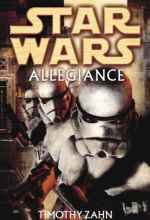
First In: Timothy Zahn and Star Wars

Topic: Interviews| No Comments »

Barring Alan Dean Foster, Timothy Zahn is the first and arguably premier Expanded Universe author. His first trilogy of books, released in the early 1990s, spearheaded the re-birth of the Star Wars expanded universe, and introduced the fans to some of their best loved Star Wars characters such as the imposing Grand Admiral Thrawn and the infamous Mara Jade. Since then Zahn has continued to contribute a huge amount to the Star Wars universe, while simultaneously persuing succesful works set in his own universes such as the Dragonback series. We spoke to him about Star Wars, his original SF and his plans for the future.

FM: Aside from the obvious, what are your current projects?

TZ:One of my longest projects to date, the young-adult Dragonback series, will come to an end in early 2008 with the publication of Dragon and Liberator. My Quadrail series (which began with Night Train to Rigel ) is continuing with The Third Lynx(October 2007) and Odd Girl Out (late 2008).

I’m currently pitching several projects to various editors, including two more Quadrail books, another Cobra trilogy, a new young-adult series called Black Cat Crossing, and three different chapter book series.

FM:You are best known for your work in the SW universe, but obviously that’s only a small part of what you have written. Do you ever feel like you want to be known as something other than the ‘Star Wars Guy’?

TZ:I have no problem with my Star Wars books getting the lion’s share of the fans’ attention. After all, that universe comes with a built-in potential fan base. And, of course, many of those readers have discovered me via my Star Wars books and have gone on to become fans of my other books. More importantly, being permitted to play in the Star Wars universe has given me the chance to meet and get to know a lot of terrific people.

Besides, I’m no more or less proud of my Star Wars books than I am of anything else I’ve written. My goal with those books is the same as with any other project: to tell the best, the most exciting, and the most entertaining story that I possibly can.

FM:In the reverse, it’s probably fair to say that your three Thrawn Trilogy novels together with Tom Veitch’s Dark Empire comic book, are responsible for birthing an entire universe that now brings enjoyment to millions of people throughout the world. You must be proud of that, and did you ever imagine while you were writing those books back in the early 90s, what an impact they would have on the fan base, and indeed on the whole SW franchise.

TZ:I don’t think ANYONE really knew the impact that reopening the Star Wars fiction line would have. (The one exception being Lou Aronica, who was head of Bantam Spectra at that time, and who got the ball rolling on the Thrawn Trilogy. He solidly believed in the project right from square one.) Bear in mind that when Heir to the Empire and Dark Empire came out Star Wars was essentially dormant, and no one knew whether or not anyone even cared about it anymore.

The birthing analogy is a very good one, by the way. Neither Tom Veitch nor I CREATED the surge in Star Wars popularity. That popularity was already there, as the instant popularity of our projects showed. We merely got to bring it all out into the light again.

FM:Mara Jade & Grand Admiral Thrawn are two of the most recognisable and popular characters within the whole SW universe. Few characters, aside from the obvious film heroes, have such a wide fan base. What do you feel it is about them that so caught hold of the imagination of that fan base, and why do you think that so few characters since have been able to exert the same effect?

TZ:I think part of it is the fact that both Mara and Thrawn have a core of honor and nobility to them. Both care about their colleagues and those under their authority, which is exactly what we see in Luke, Leia, Han, and Obi-wan. (Though Han kept that part of himself hidden away as long as he could, and for at least two movies would probably have denied that it even existed.)

That core means the readers can feel comfortable identifying with both Mara and Thrawn, and can admire them, and perhaps on some level can want to be like one of them. Certainly I think that a lot of Mara’s female fans would like to have some of her traits, while her male fans would like to have her at their sides.

Or maybe it’s simpler than that. Maybe the fans just like the fact that both Mara and Thrawn are really good at kicking the bad guys’ butts

.

FM:Do you have any plans to re-visit either of those characters in any up-coming books?

TZ:At the moment, Del Rey and Lucasfilm haven’t asked me to do any more Star Wars books. If they do, I’ll certainly be pitching stories that involve one or both of those characters.

FM:In what has been a fairly controversial decision amongst the fans, one of your most famous characters was recently killed off. Do you feel their death was well used in driving the overall SW story forward, and were you surprised by the fan reaction?

I’m not really familiar with the overall story line of that series, so I can’t really comment on whether the death was a necessary part of the story line.

That said, I don’t think that killing off major characters really fits the style and overall “feel” of the Star Wars universe. My take on Star Wars is that it’s an old-fashioned good-versus-evil saga where the heroes fight against impossible odds and eventually triumph. In the process, second-and third-tier characters might die (people DO die in war, after all), but the first-tier characters make it through alive.

My defense of this view is the climax of Return of the Jedi. If Lucas had wanted to kill off a semi-major character or two, neither Wedge nor Lando would have made it out of the exploding Death Star. The fact that both survived tells me that this should be a happy-ending sort of universe.

I should also point out, by the way, that I’m not saying this just because this was one of my created characters. I disagreed with Chewbacca’s death, too, for the same reasons.

FM:Through your SW work you have been involved in the comic book writing process. How did you find that in comparison to writing a novel, and would you ever be interested in re-visiting it as a format?

TZ:I see comics writing as being halfway between normal novels/short stories and movie or TV writing, with the chance to describe subtleties in the visuals that are difficult to do in normal prose. I would certainly like to do more of it, but so far no opportunities have presented themselves.

Discuss this topic here.

Producing the Galaxy Part 2

Topic: Interviews| No Comments »

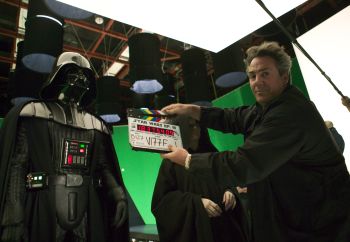
In this second and final part to our interview with Star Wars and Young Indy producer Rick McCallum discusses the many challenges facing the Star Wars live action TV series. Rick also provides insight into the world of production and what it means to work for the world’s most successful film maker.

From Young Indy to the Star Wars prequels to the future represented by the currently in development live action TV series set in the Star Wars universe between the two trilogies, Rick discusses what it takes to bring a big budget movie to the silver screen, how his life both professional and personal has been affected by trips to a galaxy far, far away.

On the audience for Star Wars

We knew back when we were making Indy that George had written the back story already and we knew that it started off with an 8 year old kid and we knew that would offend a huge group of older fans but the issue was that it was for another generation. That may hurt the traditional hard core fan base but the reality was it was for another generation who may have never had the opportunity to see the movies in a theatre before.


Click for more pictures

On the Redtails cast

We have the strike coming up and we are working truly with all American actors and are all members of SAG and so if everything goes out to strike in June so we are trying to get the film ready for summer and once we are making it and we see what kind of film it is then we’ll can try and figure out when the best time to best release the film. Right now its totally up in the air but I am still going and pushing ahead because I know that if we get this thing going and there is a strike I can still work on the effects sequences.
95 % of the cast is going to be 18 -23 year old kids obviously some will have had experience but for all practical purposes it will be all new kids.

On red tales release date

We’re hoping, barring the strike to make it for 2009.

On the challenges of producing the Young Indiana Jones series and the Star Wars Prequels

To not be on drugs for that long (laughs). That was the hardest part because it’s such a relentless…I’ll digress…. Indy started off very gently we started off with let’s just see the first year and see where it goes and we ended up shooting it for five years. The first year we started on Indy we started off and shot for 56 weeks non-stop, through Christmas, through every holiday with the same crew and we loved the experience, it was 4 or 5 months to get the right crew finally locked in and finally that became the crew for the next 15 years for us. Once we started Star Wars we knew this wouldn’t be a 5 year thing this would be a 12 year process. How do you keen that group together? How do you keep them excited?

The biggest challenge was always technically, we had to start making the film without any clue. Once you get a film even if your independent, even if you’re really successful, even if you’re at the top, even if your financing it yourself..there’s a release date and you have to know that release date on a film like star wars. You’re locked in because you’re competing with 100 other films that are released over a 3 month period and every bit of real estate on that calendar is precious, so you have a date, your locked into it, you can’t change it. You’re going out with 15.000 or 20.000 prints in 20.000 theaters, your opening worldwide day and date all the dubbing has to be done, all the translations have to be done so you have a reality that you have to live to.


Click for more pictures

Imagine building a building 100 stories high but you don’t have all engineering things, you don’t know what the weight of the building is, you take a guess at what the foundation is and then, half way through making it you decide to make a 200 story building. That’s what it was kind of like, we had no idea how far we could push. We knew we had the hardware but we didn’t have the talent or the software.

It had taken us 4 years of turning ILM from an optical company into a digital company which was really done because of Young Indy and then we had an enormous amount of pressure of pushing it to the next limit with a group of talent that didn’t really exist. We had to train and bring together and find the software tools that didn’t exist. A lot of the proprietary software had to be written just to be able to do some of the things we knew we wanted to do in Episode 1. We had this date, so you kind of back in, take a deep breath and jump into it and hope you can make it and we barely did, we only finished the film about 4 days before it was released. That was a seriously major challenge.

On the anticipation for The Phantom Menace

It’s weird, if it was a one off thing you know I could have had a chance to really enjoy it, I really had a great time, we had a fantastic experience making it, every day we were faced with a challenge were we were lucky enough to get through. Especially in relationship to the time we had available to us. You know we had to make the movie for a budget, we were financing the film and a lot of people don’t realise with the 3 prequels we made each one cost 10 % less than the previous one, over a 12 year period which has never been done in the fim industry before.

We live or die…the company lives or dies on the success of the movie so we can’t do what a studio would. Superman cost 300 million dollars, Pirates of the Caribbean cost 315 million, the last Harry Potter cost 290 million dollars, if we make that kind of movie, even with our huge grosses, we don’t survive. Again, that cost is only two third of the actual cost, each one of those films spent another 150 million dollars on prints and ad’s but we can’t spend that. A studio has huge write offs, its owned by a parent company, there’s not a single studio that represents more than 3 or 4 % of the total gross earnings of its parent company. The parent company can offset its profits in real divisions and use the films as losses, we don’t have that reality, we can’t play in that world. That’s why there are studios who haven’t made a dime in years.
You think you hear that Star Wars grosses a billion dollars but in reality I think it’s only about 17 % of the total revenue that come from a film come from the theatrical side. It’s not a pretty business in a lot of ways and that’s why there’s usually only one or two films that go through the roof a year, out of the three or four hundred that are made in the last ten. Even though you hear these spectacular grosses you only get 50 % of that revenue. I am not talking about us personally I am talking about the film company, and then it’s got its distribution…you know it’s a wacky, wacky business.

There are a lot of actors making serious, serious money, there are a few producers and there are maybe 15, 20 directors and the rest…..
You have to make a real choice when you live in Northern California on every level whether you are working at Pixar, PDA, us, Coppola’s place or Saul Zaentz’s place because we don’t have the infrastructure…we actually do actually have the infrastructure, in terms of technically we are so far ahead of Hollywood but we don’t have the networking facilities, its only 550 miles away but it takes 5 or 6 hours by plane to get there door to door and people come up here to live a different kind of life. They want a personal life, it’s very hard to do that in Hollywood because you are always on the make, if you’re an actor your paying 30 to 40 % of your gross earnings to your manager, there’s your business manager, your agent, your lawyer, your publicist so there’s a system, it’s a club, an establishment It works for a lot of people but it’s not a life that’s interesting to me in any kind of way.

You don’t make as much money up here, real estate is much more expensive up here, it’s like London but there is a quality of life.


Click for more pictures

On life after the live action TV series

There is a wonderful word, I’ve only read about it, I’ve not actually met anybody who’s actually done it, it’s called retirement.
The Star Wars thing I’m really looking forward to because we have to go back 20 years later and actually start a whole new crew in their early 20s, a whole new cast and we’ll make it as long as people like it. We have the potential of doing 3 or 4 hundred episodes, that’s over a long period of time with simultaneous series going out. It just really depends on people liking it enough, is it dangerous enough? Is it dark enough? Is it character driven enough? We just need to find the right home for it which is really tough to do on American television. It’s going to be interesting and I have such great hopes that network television will implode itself in the next 2 or 3 years by the time we are finished with the first series and it will be a totally different landscape out there anyway.

On being the media face of Star Wars

Again, I live in a different world, George is by nature a shy person but once you get him onto a subject that he wants to talk about he’s totally into it. One of the great things is that there is a part of the job, not that he doesn’t want to know about because he does know about it, but that he doesn’t want to have to deal with and that’s what you call collaboration. That’s when he…as I said before it’s perceived as a director’s medium and it is when the day you start shooting you have to hand everything over, the cast, the crew but you guys can see well enough that there has been this unbelievable focus towards one individual being the absolute creator of a movie. You can see when you look at the credits on a film, you can look at Superman, suddenly it’s the story by the director even though there are ten writers on the project the director has the screenplay credit and its produced and directed by him. That’s partly to do with the media, the Hollywood media trying to create stories out of things but there isn’t a lot of generosity out there but that is not an issue that George has what so ever. The big thing that we have is that we truly believe there are a lot of deeply talented people out there.

I’ll give you an example even talking to you guys, one of you is from Brighton one of you from Devon, that’s not traditionally a place where if you are part of the film business you would be but it doesn’t matter where you are now. It doesn’t matter where you write from but there are a lot of people in this country where if you’re from Kansas City or Columbus, Ohio and you’re not a member of that club or don’t have access to it your fucked, even though your deeply talented.

One of the things that George had especially was he wasn’t a social being, he’s got lots of friends, an incredible family, and he’s got his company but he wasn’t into the schmoozing, and he’s not good at and there are a lot of people out there and he was incredibly lucky because Francis discovered him. He was incredibly lucky that he didn’t have to go through that because if he had to he probably wouldn’t have got his first film made.

The only way you can really control your life on any level is to be independent, there are certain times in your life, sell out is the wrong word, where you have to be hired. First of all it’s a challenge because it’s a craft and you have to learn your craft. Second of all like most people you get married, you get divorced, you get a car, it breaks down, you get a mortgage, you lose it with your first wife, you go to your second wife there is just the ebb and flow of life that everybody experiences but you need money for that. You have huge periods of your life where you’re not working, you are developing but you have still got all the accoutrements that need money.
One of the great things now and one of the things we have tried is to de mystify and de mythologize the business in a sense that if you have the talent you will find your way. Right now for the first time you can actually express yourself with a Mac computer or final-cut pro and your own HD camera all those are reachable. When we were growing up you couldn’t do that. A camera cost 8 thousand dollars a week to rent.


Click for more pictures

They learn about blocking, they put it together, it sucks and they can make 8 or 10 or 15 films, that’s one of the dilemmas about the business. You’ve got people who can bullshit really well, they get on well with actors but they do nothing technically, they never get a chance to actually learn their craft and that’s why I can’t wait to set up the series because everyone else that we have we have been working with has moved on, their into their third marriage now. Their into their golden moment and I have to hope that the group of young kids I have to get together, is going to have to have the skill set that nothing can stop them. That’s part of the absolute, real impact of Star Wars, the impact is what’s extraordinary. After I finished episode 1, for 10 weeks while we were prepping episode 2, I had 10 weeks to go around the world to 40 countries and I got to see the impact, especially between 8 and 12 year old boys the impact was huge, it was monumental and they have grown up with us and kids who were 8 and 10 years old with episode 1 are 18 now and they have stuck with us and they have phoned us. We try to get as much information out to them of what it’s like and we have 4 or 5 exhibitions going on all the time around the world, we just had Star Wars Celebration in London. Here’s what goes on behind the scenes…you’re not good at being a cinematographer but you like building props? Here’s where you can go to school, here’s where you can learn, here’s the guys who can teach you. You like making costumes?
That’s one of the amazing things about Star Wars it taps into something deep for people.

I don’t know if you ever saw the Simpsons parody on it, it was fantastic. It was about episode 2 and the kids were saying that was the worst Star Wars…that was the worst one, but I gotta go Dad ‘cos I gotta get in line to see it again. There is just something about it that goes deep.

As a company we have always tried to make that accessible to everybody, we have every single thing that we can do for everybody around the world that writes us, they get a letter back, they get advice where to go to school, We have a huge internship at ILM anything because most of our people want to get into the technical side.

We shot 800 hours of making the whole three films and the painful moments not just ‘oh I love working with George because he is so talented’ and ‘Rick is such a nice guy and I have to say that because he won’t hire me because he is an alcoholic and he is addicted to ecstasy’ (laughs) but it’s the real stuff where I am on ecstasy and freaking out and stuff. We are trying to get that DVD out for everybody where it becomes like a miniature free film school, DVD is too expensive to make it work but we are trying to get online. Lots of stuff that we are trying to do, with the screenings and trying to get everybody involved, our website is huge and we spawned after 2 and a half years since episode 3 we will still do a billion dollars worth of toys this year without any product out there, it goes deep.

For Him (Lucas) obviously it’s an incredible blessing but it’s also a little bit of a curse because its, you know, 30 years. One of the things we really wanted to do, the subtext once episode 3 was done and was successful was we wanted to make sure the rest of the company was setup properly that now they really are on their own and each year they’ve got to find the water, where they didn’t have to find the water before.

Basically George..I don’t know if you remember Citizen Kane that wonderful line with Orson Wells where he was spending a million dollars on his paper and his accountant came up and said we are going to spend a million dollars running this paper, and Orson Wells looked down at him and said based on that rate we could keep on going for the next 60 years. I think basically George has enough of a war chest to go off and once he is ready to, and that probably won’t be for another couple of year, but once things have settled down he can go off and make 20 films that don’t work. That will be made for him, his family, his friend and hopefully there will be an audience out there but if there isn’t it doesn’t matter.


Click for more pictures

On keeping the Star Wars concept fresh

That’s the major challenge and that’s the toughest, the million dollar question. First of all this would never be a network television show, this would be cable. You have got to remember the dynamics of cable are completely different. If we were on network TV and I didn’t have 15 to 20 million viewers we would be considered a failure. But on cable we get 2 million to watch Star Wars were a hit and also we don’t have advertising we have to deal with or advertisers . WE have to provide something where people want to join that cable company. I think that’s where we can, whether its HBO or Showtime whatever one’s out there, our audience, especially our traditional audience or the younger audience is exactly what those cable companies need to survive.

But lets say the business is so imploded I believe we have enough that I believe we can make it.

The goal is the same that we had on Indy, how do we find the real characters to make this, because this can’t work on effects and plot, this has to work on character development. This has to be challenging enough to get 2 million adults to pay whatever it is to go see it. That’s the real challenge, can we not be goofy enough, can we be dark enough, and dark enough and exciting enough. Its all different characters, its based between episode 3 and 4 in that 20 year period where luke was growing up and we don’t see anybody from the original movies now that’s a challenge. We have a darker story, we like to think of it as Deadwood in space, its totally character driven. Can we make that work, that’s no 1.

The world we will be in 2009, 2010 its like the unreality that’s going HD and Blue-ray right now, I don’t think either one of them will become significant formats because I think we are going jump right to downloading. The challenge for us is how do we make it look like a feature film on a television budget which is exactly what we did with Young Indy, is the template for Star Wars. We have to go back and we have to try and now bend the technology that we created to the point where we can make the tools, the software easy enough for young people to learn who are on a different scale of earning power but have the opportunity to do things they could never do until they have been in the business 10 or 15 years.

How do we stop this nonsense of films costing…we are going to see a 400 million dollar film soon, I don’t know who its going to be, there were 6 to 8 films last year that cost close to 300 million dollars and over. That’s serious fucking money, that’s so out of control money. If you have a film like Pirates that does a billion dollars. It takes home 500 million dollars, it cost 315, 320, it has 150 million dollars in print and ads it doesn’t take much accounting to realize that picture’s not going to break even. That’s based on the unreality of the stock market the perception is that if the stock price goes up by 3 dollars, the companies worth 3 billion more, even though the film doesn’t work ,but if your independent you can’t like in that reality. If you want to stay outside of the system even making what the system does you have to make it for half of the system does to actually make real money at it, and that’s one of the biggest challenges. If we go off and do Georges films we want them to look like they cost 100 million dollars but we want to make them for 20 and the fun part for me specifically how can we actually get a hold and a handle on the talent and use talent from all over the world to be working on our shots. We want to bid out our shots to kids who while they are in school could do wire removal and we say maybe we give you 300 bucks to get the wires out of that and if you do it well you get the next shot. That’s the only way we can get to the next level.

On the terms of ‘How do we make it different…that’s the really big one’

The real problem is I’m not going to know that until we sit down at the end of November when we sit down with all the writers. We have an idea of where we’re going but it’s so vague. The real thing is now how do we bring a group of people in who can stir us up, challenge everything and turn it into something. That’s the beautiful part of the process. Here’s what we want to do. This is the basic overall plot of what we want to do and the kind of characters we want to create now lets start at page 1 and work it through.
Sometimes you have good days and sometimes you have bad days but if that group really clicks it’s amazing.

The only thing I learnt was taking in taking television to film because the film business is so bloated. So deeply in need of implosion. Think of it this way… take a series like Life on Mars, you have something that has to be shot in 5 days, 8 pages of dialogue, probably anywhere from 8 to 10 move a day, they’ve got 1 million pounds to make it, probably less 750 thousand, 800 thousand pounds to make it. You’ve got good actors who have to do literally anywhere from 6 to 8 pages of dialogue a day and you’ve got 5 days to do 50 or 60 pages. Then you go over to a film set, you go to Shepperton, you go to Pinewood and look at a big budget movie being made. Look at the call sheet, an eighth of a page is going to be shot. You have got a film that’s going to take 125 days. But remember Life on Mars as soon as they finish that five days they go into another five days and they go into another five days after that and in 15 days they have done almost 3 hours worth of entertainment that could be cut down into a feature film, it has twice as many production values on a certain level in terms of location it has a depth of story and character that goes deeper than any movie…probably deeper is the wrong word but more complicated. Then you look at the film that ends up costing 150 million dollars where you have got 2 million dollars in 3 episodes of Life on Mars. The irony is the camera man who’s working on the movie makes five times as much money as the guy doing the television show, the actor makes 500 times less than the guy who’s only got to remember a page of dialogue. It’s a totally different business and there is no reason why the business should be that bloated

.

It goes back to when you have a project you have an idea of what that audience is going to be, that determines roughly the budget and you have to live within that commitment otherwise you have films like we’re having now and like we have had for the last 10 or 15 years that are being made for 80 to 100 million dollars where there was only an audience that 2 million people could have gone to.
Again, you Little Miss Sunshine that breaks through but what gives it incredible profit would mean a different to all the film makers was if it had been made for 50 million dollars it wouldn’t have made anything. My whole life I have never understood it, I started in feature films and went into television and I said this is fucking nuts. I want to pay the camera man who can shoot 8 pages of dialogue in a day the money that the film cameras making because why wouldn’t I? I don’t to be sitting around a set shooting for 14 hours a day getting a page and a half of dialogue. Its bullshit. Everything is so serious; film has become this whole thing where the director, and I don’t have anything with the director being the god, but the whole things has become so out of proportion to what it is. At the end of the day truly most people don’t give a shit the set design, the cinematography..they don’t even care about the blocking all they care about is do I like this actor and do I care about him.

Young Indy is the best thing we have ever done, it’s the most fun we have done doing anything. We got to shoot in 40 countries which was amazing, we managed to somehow, now me personally, but all of us got to stick together for that 5 year period, we didn’t loose anybody we were tied to the hip. Once you are away from the family for 50 weeks a year, the kids are in school and you are working with a group like that it’s a pretty amazing experience. Also I had the most incredible opportunity of working with 25 amazing directors. Usually If you are doing a film by the time you have started it and finished it, if you are the sole producer it takes 2 and a half or three years. If you are really lucky you do 10 films and you work with the same director a couple of times you only get to experience maybe 5 or 6 different directors. This was brilliant because you had Billy August, David Hair, Nick Roeg, Mike Newell and just an incredible group of directors who came in and didn’t take it too seriously. They said this is going to be fun I am going to learn about the tools of cinematography and digital effects and on that level it was just fantastic.

Depending on what happens with the storyline and everything else if the nature of the story lends itself to that then we will definitely try and do that and if it doesn’t then we will try and get 2 or 3 directors who can really work on doing 3 or 4 episodes during each season and maybe have a few guest directors who want to come in because believe it or not there are a lot of directors out there, especially film directors who say oh my god I can go in for two weeks, I can prep for a week and come in and learn some new things about technology and see how they are making it and why they are able to do this so cheap. Then we edit it and they come in and give their final cut and make their changes so for a 3 or 4 week involvement they don’t get brain damage in between projects and a lot of directors go and do commercials everything else and this is kind of a lark and on that level this is really great. The trouble again for a director just like all of us, for everybody it’s your shot now, because the films are so expensive if you blow that shot, if you’re a young director and you can go off….and you can look at the history of English directors they do one little film that’s great…what was that film that was a huge hit….the Full Monty. He made one of the most successful films in English history and the pressure, I don’t know him personally he made a good movie for very little money that did 250 million dollars worldwide…what happened?

This is so fucking tough, you’re a young director you suddenly make a movie and then your offered 5 million dollars to go to Hollywood and make your own movie where you know in your heart you should do but everybody thinks you’re so great for that moment and Meryl Streep wants to work for you but its just not your culture or whatever it is and then you eat it and you eat it so bad that it takes you years to get back up. It takes you three years to get your next project, it’s a really, really tough business.

When Peter was doing the first Lord of the Rings, imagine the pressure. He had been fucked every which way and he stood his ground about one thing, he was only going to do this if he could make all three. That battle was years in the making, first Miramax and then New Line then the budget issues and the whole thing he stood his fucking ground. In the middle of all this he does this extra ordinary thing, he has been shooting for 7 months he has had every fucking thing go wrong in terms of weather, the New Line relationship the whole thing and he has got a week off before he finished the last two months of the movie. The cast are exhausted, they are all on location, they have had unbelievable weather and what does he do for his week off, he fly’s to Sydney and sits down on the set and watches us making Star Wars for a week. Its incredible, it was such a pleasure to see him but that was his holiday after two and a half years and seven months of the worst kind of film making, when I say the worst, the hardest kind of film making and all he wanted to do with his five days off was come to Sydney and watch us shoot.

There is a lot of people who are interested but everybody wants to see the script now, you can’t even go off and do a TV show, it’s got to work on some level. If we aim for that cable market or two or three million downloads or whatever its going to be by the time we get this finished instead of this kind of weird monster hit you have got to have.

On reaction to the prequels

There were things that I cringed about that I still continue to cringe about, but here is one of the unique things about George especially in relationship to Star Wars and the only time I have ever seen it is in Spielberg and Lucas. That despite their unbelievable success and despite this incredible jetstream they live in, they still both look at the world….Usually when you are blocking out a scene you have a lens attachment and you are doing it from your height.

Usually the camera operator will come over with the key grip and boom the camera is right at eye height. Those guys look at it from exactly the height of what a 9 and 10 year old boy is and they look up, and it’s always about the wonderment and the amazing thing that is going on in front of them. Despite they are both in their 60s they will at through the camera or lens they will look at the operator and then bend down and say here is where I want the camera. It’s not conscious either. I have seen George and he doesn’t even think about it, it was where that moment, that epiphany was.

Things like Jar Jar, or whatever it may be, and Jar Jar who is considered one of the most polarizing creatures on the planet..other than Bush..you have got to remember that in that day when it came out people who were in their 20s, 30s, and 40s Jar Jar was everything repugnant to him but Jar Jar is one of the most popular characters. But you had to be an 8 to 10 year old boy or girl to enjoy Jar Jar. That’s what drove that movie to a billion dollars.

Part 1 of Producing the Galaxy can be found here.

Discuss this topic here.
George Khoury

Topic: Interviews| 1 Comment »

Pádraig Ó Méalóid: So, George, where are you from, and where did you grow up?

George Khoury: I was born and (mostly) raised in Jersey City, New Jersey, USA. Jersey City is a place that can be pretty tough to grow up in. It’s a very mixed town with a tradition of corrupt politicians and crime that continues to the present day. Parts of the town have been severely ravished by the economy and by lawbreaking. The waterfront is now full of offices; economic development has been really slow for the rest of the town. The city is only minutes away from New York. I have no nostalgia for it.

PÓM: Do you remember the first comics you read?

GK: I was exposed to superheroes by watching television - seeing the Adam West Batman in the mid to late seventies when I was a wee lad. I just fell in love with the concepts of superheroes. Sadly, television was my best friend growing up. I always remember my recently departed grandmother’s apartment had a copy of my uncle’s Buscema Fantastic Four that had apparently been used to cover the floor when painting the place. I remember vividly seeing the ad on the floor at the housing projects, like litter, for Superman vs. Muhammad Ali, which I though looked awesome.

My first comic proper was a Betty and Veronica digest that I picked up at the airport during the only family vacation we had; in 1978. Later that year, I traded my Catholicism book - you get it and a rosary when you become a Catholic - for a copy of the second Star Wars Treasury by Marvel. (So much for heaven.) I loved Star Wars growing up. It made me more conscious of comics.

Comics were kind of frowned upon in my house. My dad hated them. I would hide them from him. They would buy me colouring books; they saw those as educational. A lot of those were superhero ones. They thought I had some artistic ability since those books would keep me busy. I also had a strong sense of colour coordination.

PÓM: What do you do for a living??

GK: For the last two years, I’ve been writing a lot of things that no one has seen. Sad, ain’t it? Although good things seem to be coming, otherwise this is the end. I first got published when I was eighteen.

Prior to that, I was working with my brother by managing his office. After graduation, I tried to enter the corporate world by seeking an MBA degree, but after several stints at various white-collar jobs, I got tired of that game.

PÓM: You’ve been writing about comics for quite some time now. How did that start, who have you written for in the past, and who are you writing for currently?

GK: In 1989, I began to write sports articles for a newspaper called El Siglo, which was a major newspaper in the Dominican Republic. I was a teenager off the street that approached the sports editor with my articles and he simply printed them. I never got paid one cent. It’s one of the few things that I did that made my dad proud. It was a good confidence booster. My last three years of high school were in Spanish; I even did a year of college in Spanish. Watching a lot of television and reading comics helped keep my English sharp during the five years that my family lived overseas. I was really out of place over there. It still surprises me that I could write these pieces well enough for print in a second language. I couldn’t write those articles today in Spanish.

During college in the States, I continued to write. I did an internship at Marvel Comics. I did that because I knew that I couldn’t work in a typical office. Back then, I thought it would have been cool to have been a Marvel editor. The only problem was that I couldn’t have chosen a better time to have been there. Tons of people were laid-off, since the comics market had collapsed. It also didn’t help that the editors that I interned for just didn’t seem passionate about what we were doing. I still enjoyed it. I really loved comics. I wanted to work there and help turn things around. I found that people at Marvel or DC sometimes don’t want people who are enthusiastic for this art-form around them. It’s really disturbing. I just remember being so filled with energy and passion for that place. I remember quitting my $15.00 per-hour college job to go to Marvel for no money or encouragement, but that’s the way life goes. It was devastating to see so many good editors get their hearts crushed back then. Ironically, both of the guys that I interned for survived that ordeal somehow.

Around 1997, I began to write for Creative Screenwriting and Comics Buyers’ Guide at the same time. I decided that it would be better to put my energy and passion into writing about the things that I enjoyed. Heck, anything that sounded interesting or appealing, too. That type of philosophy has never really failed me. I put my heart into the things that I do. I don’t want to just do a gushing love letter; I want to be honest and know everything about whatever it is that I’m covering. I don’t believe in falsehood or puff pieces. There is a way to do solid journalism without losing your dignity.

I was hoping after the Image book to refocus on what to do afterwards. I thought I would feel tired and burned out, but I’m strangely excited about some of the things that I have in the pipeline. There are still a lot of things that I want to do. If all goes according to plan, my next book from TwoMorrows should be one called The Age of Heroes. It’s something that I’ve wanted to do for a long time. It’s a history book about superhero television shows based on comic books. After the 2003 San Diego ComicCon, my friend and G-Force co-writer Jason Hofius wanted to know what I wanted to do next together. I pitched this idea to him and we talked about the content for hours - I knew that we had to do this together. Jason has become a very good friend and a very good writer. This is a huge book that I couldn’t do without him. It’s also very different from what you would expect. It’s a book that’s being written with a lot of emotion; very, very different from the usual way that someone would handle this subject. This book has every major player of these shows that one could imagine. We’ve been working on it for years and all the interviews are done for it. I plan on spending my summer polishing it.

PÓM: You have three books published by TwoMorrows, Kimota! The Miracleman Companion, The Extraordinary Works of Alan Moore, and True Brit. The three of them form a loose trilogy of books about UK comics. How did you end up, all the way over there in the US, deciding that you needed to write these books?

GK: Two words: Alan Moore. I don’t think a lot of folks realize how important Moore was to the UK scene in comics. His work led me to discover new worlds in comics. I would not have discovered the majority of the British comic talent that I love without bumping into them as I hunted down Alan’s 2000AD work, and his lesser-known books. If you read the three books in order, I think you’ll see how I just wanted to get deeper and deeper into British comics. I was really hoping that True Brit was a bigger success; there was so much that I had left to cover about it. It does bother me that there’s little recognition for these men in the UK. To this day, my favourite comics are usually those written by British creators.

PÓM: Kimota! addresses the thorny question of who owns Miracleman. Do you have any strongly held opinions on this yourself?

GK: Why don’t you just ask me where’s the Fountain of Youth? (I kid.)

The main reason that Kimota! happened was because there was no information about Miracleman anywhere, in-print or on-line, when I wrote the book. Even in interviews with the Miracleman writers and artists, seldom did they speak about the characters because the interviewers were always more interested in talking about anything but Miracleman. And if they did talk about them, it was usually a line (or two). There was very little for me to go on. Around that time, people on-line and in print began to speculate and make up stuff. The lack of history for my favourite character is what appealed to me.

My favourite thing about Kimota! is that it leaves the answers up to the readers. Hey, you’ve read all the facts: now what do you think? It’s because there’s no really simple answer to this. I also don’t want to preach to the readers. I’m sick of the way that journalism preaches and puts fear into people. In Kimota!, it is up to the readers to judge for themselves.

The confusion about the rights is something that has only been compounded over the years since the Miller family stopped printing Marvelman. Who is to say who owns those characters? What I do know is that those stories are owned by the people that wrote and drew them. The true value of Miracleman is not in the characters but in those stories that Alan Moore and company made.

PÓM: As part of your research for The Extraordinary Works of Alan Moore you ended up visiting Moore in his house in Northampton. How did the book come about, and in particular how did you end up being able to visit him at home?

GK: At the time, Jon B. Cooke (the editor of Comic Book Artist) and I were very close friends and about to begin work on the ill-fated Swampmen book (a history book about swamp creatures in comics). Well, Jon decided that it would be a good idea if we interviewed Alan together for that particular book in person - I believe Cooke asked Alan if it was okay for us to visit him. Anyway, that trip was a freaking nightmare for me because of jet-lag and some sort of weird stomach cramp that I had on the flight. Jon being the more boisterous guy, took over the interview when we met Alan. I pretty much did nothing (or could do nothing). All I did was soak up the environment and listen. By the way, I ended up using all my questions for the Swamp Thing segment in the Extraordinary book.

Extraordinary Works came naturally as a result from Kimota!. As Alan was about to turn fifty years old, I thought it might be interesting to reflect on his career to that point. I remember telling him, We’ll start at the beginning and end at the present. Alan liked the idea - thank God. We broke up the interviews into monthly sessions - I’m pretty sure there were six or seven in a year’s time - whenever he had the time. In between sessions, we would do these interviews in chronological fashion, I would prepare and write my questions and reread everything on him and his books - I always prepared because I don’t want to waste anyone’s time. It was a lot of work but doing that book with him is one of my favourite journeys. I always hoped that he liked it. I wanted the tribute strips in the book to be a surprise for him - I wanted to have all of his key collaborators participate in this. A few, like Eddie Campbell, Melinda Gebbie, and Kevin Nowlan, dropped out when I got close to the deadline. If there is a new edition of this book, I will approach them again. As a fan of Alan’s work, this was the type of book that I’d been hoping that someone had done - one that was about his books and work; and his development as the finest writer in comics. I’d hope that a book like this would inspire someone to do their best in anything that they do.

PÓM: Before I ask you about the Image book, I know there was one other book you were meant to be working on for TwoMorrows, about the various swamp monsters in comics, like Swamp Thing, Man-Thing, The Heap, and so on. What prompted you to want to write this, and how is it coming along?

GK: For me, Swampmen is dead, sadly. It was a total waste of time for me. It also cost me the friendship of the best book designer that I ever had - Paul Holder of True Brit. Swampmen was to be a very fun experience about the light-hearted history of swamp monsters in comics. This book has only brought me heartbreak. The book started because I wanted to work with Jon Cooke - he asked me to join him. I tackled this book with everything I had; I read every single issue of Swamp Thing and Man-Thing. I did my interviews, checklist, research, etc. Jon also did a lot of work, but nothing was really happening. Because this was Jon’s baby, it was up to him to lay it out, but he couldn’t ever meet the deadlines. He could never get this project done (or even start designing it). I’m not quite sure why; maybe this book just had his number. There was even a time that we stopped talking for months (that has happened a few times since) because of things happening in his life. In 2005, I asked Jon if he would be fine with me taking over this project - his credits would stay exactly the same - all I wanted was to get it done. During the spring of that year, he agreed. I had a plan for how I was going to do this; I asked my friend and designer Paul Holder to come in and design it. As I waited for Jon to turn everything over, he had a change of heart. He said he had a vision for this book and he wanted to be the one to complete it and design it. This crushed me. It felt like a slap in the face! To make matters worse, Paul stopped talking to me. This all happen in a matter of weeks. Of course, the book would be cancelled again by the publisher for the third time. I withdrew from the project after this. If Jon wants to do it, he can - I’m not a part of it. This book was just a lot of heartbreak. I decided to let other people enjoy the interviews. The Totleben interview appeared in Rough Stuff. The Tom Yeates and Roy Thomas interviews will appear in other magazines - I did not want to let Yeates and Totleben down. The rest of the work will be lost.

PÓM: Your latest book, The Road to Freedom, is about Image Comics. What can you tell us about it?

GK: The arrival of Image Comics is one of most exciting period in comics’ history. Image’s impact is so powerful that it continues to shape the way comics are done to this very day. The attraction to me is what the seven Image founders were able to do together. I admire them for having the guts to stand up for themselves - in this industry, speaking up isn’t encouraged; people have been blacklisted or branded as difficult for speaking up. My book is about Image’s impact in the industry and the character of those men. Whether they realize it or not, they did do something very special. I admire any artist that fights to do whatever it is that he wants to do. I really do hope that people can learn something from their story. I hope that it gives them some passion for this art form that has so much potential. I devoted a lot of time to studying this story from every single angle that I could think of. I’m mighty proud of how this book came out. I’m really worried about this industry; I really want people to learn something from Image’s history. Comics are incredibly stagnant at the moment. Marvel and DC are producing some of the most uninteresting stuff that I’ve read in a long time. This whole marketplace is really artificial right now. Everyone is doing what they can to sell comics, but no one is thinking about producing quality stories. The big two have lost their eye on the real prize. The scary thing is that a lot of these things happened in the 1990s. Everyone can learn something from this book. For me, it really opened my eyes on a lot of things.

PÓM: There was some falling out between the original founding members of Image, I believe, over the intervening years. However, within a few weeks of the publication of your book, you got to chair a panel at the San Diego Comic Con with all seven original Image founders. How did that come about, and did you have any direct input into it happening?

GK: The entire time I was working on the Image Comics: The Road to Independence book, I thought it would be a great idea to reunite the seven founding members for a panel at the San Diego Con to conclude this book and celebrate the fifteenth anniversary of the company. I pitched the panel to Comic-Con without any promise that the seven founding members would all attend. Most of the guys didn’t want to do this panel. As the days got closer, I noticed a shift in their attitudes and saw they were eager to do this. For myself, it was a lot of work and frustration to prepare this panel but having them together was worth it all.

PÓM: What are you working on next?

GK: Age of Heroes. This is a sentimental history book about the television shows that are based upon comic books. I’m working on this with my friend Jason Hofius, my co-writer on G-Force Animated. It is with these shows that my love for comic books began, so I’m going full-circle. There are also a lot of surprises in this one. It’ll be out for summer 2008.

PÓM: Finally, have you ever felt you’d like to get on the other side of comics, that is actually write or draw them? And if you could pick just one to work on, what would it be?

GK: I’d actually like to write comics - or I could probably help more as an editor in bringing in some fresh stories and new blood - I haven’t tried really hard to break in because of all the bad vibes that I get from comic book editors at Marvel and DC. I did have one dream project that I tried to do a few years back - I wanted to write a story that John Totleben would illustrate. He’s probably the one artist that I’d love to work with. I have the utmost respect for John as a person and as an artist. He’s freaking amazing.

Anyway — I wrote a special Batman: Black & White script just for John. He read it and liked it so much that he forwarded it to DC editor Bob Schreck as something that we would do together, he never told me that he was going to do that. Well, I got a phone call via my message machine from Bob saying that he liked the story but felt that it was something that’s already been done. “Done?!?” Has Bob ever seen the things that John could do with Batman? Well, we were close but no cigar.

The story was about the one cynic in Gotham City who didn’t believe Batman existed. The funny thing was that Batman would have been in every single panel; Batman is everywhere. I still like this story. John would have drawn the heck out of this thing. In prepping for this, I read every single Black and White story; I thought this would have been kickass. Never did speak to Schreck.

Thanks for reminding me of another goal I have to do.

Discuss this topic here.

Producing the Galaxy Part 1

Topic: Interviews| 3 Comments »

It’s rare to secure the opportunity of speaking to people involved in bringing films to the screen that have really meant something to you. Through a dose of serendipity and steadfast organisation we had the chance to interview Rick McCallum, most famously the producer of the Star Wars prequels, and also the former collaborator of two great British writers and fillmakers, Nicholas Roeg and Dennis Potter. Mr McCallum’s credits include Pennies From Heaven, The Singing Detective and Dreamchild.

We scheduled a telephone interview with Mr McCallum for one late September afternoon. The interview lasted ninety minutes and ranged far and wide over Star Wars, Indiana Jones, independent filmmaking and the filmbusiness today and the challenges of being an independent filmmaker. We also had some thoughtful insights into two new Lucasfilm projects being produced by Rick, namely the live action Star Wars tv series and the forthcoming feature film Redtails.

We’d like to thank John Singh in the Publicity department at Lucasfilm for making the organisation of the interview run so smoothly and again a very big thanks to Mr McCallum for his enthusiasm and time spent talking to us and providing a lot of inspiration for any new and emerging filmmakers out there.

Part 1 of the interview by James Clarke (for more on James’ work please visit: www.james-blueskies.blogspot.com), part 2 will be featured in our November issue by Russ Sheath.

Rick on Redtails

Q: How are things developing with the new Lucasfilm feature, Redtails ?

I’ve got a number of things going on right now. We have a wonderful writer (named John Ridley, announced as Redtails writer in August 2007), writing Redtails. I take off in October to scout locations so I’m setting that up to shoot in Europe and in the meantime I’m also getting together our first writers’ conference which I hope will take place in November for the live action Star Wars tv series and we’ll probably shoot that in Australia. We’ve got writers from the UK, Australia and America.

Rick, what is it that appeals to you about the Redtails movie ?

It’s an incredible little slice of American history. I wasn’t involved (with its development) when it started because I was doing Indiana Jones (tv series) but one of the things that always attracted us was there’s this huge scope. It certainly has the potential to be a truly epic movie. As the drafts came through there were so many conflicting ideas and viewpoints (from the the writer and director at that time) and then HBO tried to do a tv version and that was not successful at all as a story or as a film. You know, we were in Star Wars heaven and hell (so) we put it on the back burner at that point. But the core of it is a group of unbelievably talented African American kids, 19 and 20 years old and they got their shot finally being able to perform in the war and what they did, they did it so brilliantly and admirably and that’s really what we’re concentrating on. What was it really like ? How do we create what it was like to fly. We’re trying to push the effects to a whole new photorealism so that people can experience what it would be like to be in a small, little plane and go through that and be nineteen years old.

Does the Redtails movie story take us through recruitment and training of the aviators ?

This starts straight in Tunisia and goes right into the war. It’s more of an adventure story – lots of guys were killed, you learn to like them, to fall in love with them. They go up, they die. It’s more about what they became once they were put in the line of duty. It’s a much more uplifting film than it could have been. The thing that makes the story for us is it’s just an incredible story of the best and the brightest and they just happen to be black. This is totally photorealistic and a low budget picture by our standards. The challenge is not so much the shooting , it’s the story, the characters. We want to go for an Empire of the Sun, Pearl Harbor level (of photo realism) of what it was like to be using those Mustangs.

Rick, what’s the audience for Redtails ?

It’s for everybody. It goes through a long tradition – there’s always been something about fighter pilots in our imagination, they’ve always had the right stuff. There’s a lot of pilots out there when they’re probably wouldn’t if Bush wasn’t president. It’s always been such an integral part of the American psyche and so we have that audience.

We’re really after kids: everything’s a video game now. (Kids) have so much at their fingertips; they have an utterly digital life. Most of the adventures they take on now are virtual, anyway. There’s just something really appealing, if we do it right, of showing was it was like to be nineteen years old and up in a plane. (The Tuskegee Airmen) couldn’t go off and make kills. Their job was to protect the white guys. They were only recognised in May 2006. They never lost a bomber to enemy aircraft. Their job was to protect those bombers. There’s no way to express how bad (the racism was) and the racism is inherent in the story. We’ll let the DVD and the documentary – if you loved the film, loved the story – you can find out everything about it. It’s not something that we’re shying away from.

On the forthcoming live action Star Wars tv series.

Rick, what’s the status with the new Star Wars live action series ?

We met with hundreds of writers (over the summer of 2007). I love meeting writers especially when they’ve been locked up on writing something for a long time. (We have) a combination of both (new and established) writers, not anybody who’s been in the business for like thirty years., but people who’ve had stuff made and we’ll have a junior set of writers too.

What do you look for (in a writer) for the Star Wars tv series ?

What we do is we see close to three hundred writers – some are busy. Once a month we go to Los Angeles, and two or three times a year to London and Sydney. You find out if you can connect. Some people have done really successful shows. It’s about who’s talented, who’s got the strength to challenge George and also, much more importantly, what’s the dynamics of the five or six people. If they can let go of their ego and work toward a specific goal. Sometimes you think “I’m sick of writing alone.’ Everyone has their ebb and flow. We’re trying to get everyone in their peak.

So, is it similar to the writing process that took place for Young Indy ?

Yes. On Young Indy we had four writers from England and two from the US. It was just a wacky groip of people, totally different outlooks on life. It’s a casting thing. And that’s down to luck.

The Young Indiana Jones tv series and the man in the hat more generally.

Are you pleased to finally have Young Indy on DVD (released this October 2007)?

I feel great. We also produced 94 documentaries (for the DVD release) - that was a four and a half year fest of incredible people. I couldn’t be more proud of Young Indy. We set up a documentary unit. Everything with Indy has always been - it just was a blessed project. It doesn’t happen often in life, whether it was the first three films, then Young Indy, the documentaries and now Indy 4 – I think that’ll be a brilliant film. It’s just always had a special thing., something about it. Star Wars didn’t have that, Indy always has. George goes down once every week or two (to the Indy 4 production).

On the work of a producer and the challenges of independent filmmaking.

Can you give us some idea of the role of a producer and ways in which it is different to be a producer on the Star Wars films?

That’s a tough question. If you’re producing you’re a producer. If you’re not, you’re not a producer. There’s an old joke in Hollywood that a producer was someone who knew a writer. Producing really depends on what kind of relationship you have with the director. I’ve always been lucky and blessed because I’ve worked almost exclusively with writer-directors and directors who have authenticity to be able to do what they want to do, even if we’re making commercial films, like with George, we’re outside of the Hollywood establishment. I’ve been blessed in having really wonderful directors to work with. I live in a different kind of reality (than many other producers). In my job, and I think it is the fundamental role of a producer and it is not that romantic, but basically our job is to enable a writer-director, because film is a director’s medium. TV is a producer’s medium, a writer’s medium. But film has…at some point you have to let go. My job is to enable that writer-director get every single thing he wrote down in a perfect world and try to get it as close to his respective imagination as it can possibly get to. If you do that – it depends again if you have a great relationship with a director – I love the process of - if you look at the average film now – that’s a world of the quote unquote creative producer and the line producer – so I can’t be involved in that kind of work.

After the terrible failure of my first film, Pennies from Heaven, I wasn’t really able to become part of the studio system so I went to a place where failure was rewarded and that was England – as long as you made the film for a little money and your peers and the critics liked it could make another film. It was a simpler time – I got to make nine movies in seven years. Then the world changed – there was a whole different economic revolution going on.

Then I got the chance to try out – I met George (in the late 1980s) and we kept the relationship going and he had the idea for Young Indy. In the late 1980 the economic reality of filming in Europe got really tough. There are two different worlds: I have the greatest respect for the independent world – anyone who’s striving to control the destiny of the their own personal life and the work that they do, but it’s very very tough. The problem now is you can’t do it now unless you have a success, unless you have millions of people coming to your film. The roll over is very long now. Very tough. In those gentle days , and I don’t mean that England loves failure, if they just broke even and they thought they were ok, and everyone kind of liked them, you’d get enough money to make another movie. But you’d always have to know what that author was in direct relationship to how much money (you could get).

When I used to work with Nic Roeg I always knew there’d be five million, say three million people around the world, who’d always go and see a Nic Roeg film. You knew and you’d take the average ticket price of, like three dollars, so that’s nine million, so you get fifty percent of that and then you’ve got marketing costs so you’d know that if you made the film for a million pounds nobody would get burned. But if you tried to make the film for three million dollars you’d be fucked. The economic realities mean you always had to scrounge around but you had a life.

You have to know which part of the audience you want to go for – we had that issue with the prequels.

From Dennis Potter to George Lucas, Pennies from Heaven to Redtails, Rick McCallum has had one of the most varied and interesting careers in Hollywood. Endlessly passionate about his work, he’s seen and been at the forefront of near seismic change in the industry. And it looks like he wouldn’t have it any other way.

Look for part two of Producing the Galaxy by Russ Sheath in our November Issue

Discuss this topic here.

Amber Benson

Topic: Interviews| No Comments »

Amber Benson (“Tara” from Buffy the Vampire Slayer TV show) did a brief tour in the UK to promote her new DVD Love, Liars & Lunatics. Visiting a fair few Forbidden Planet International shops, one of which (luckily for us) is located in Leeds.

The signing was from 4:30 to 6pm on Wednesday 19th September and unfortunately it was one of those grey days where you just knew it was going to rain at the worst possible moment and of course, it did. The staff of FPI Leeds were kind enough to let everyone in to the shop whilst they waited. A few were there to get things signed for friends or family but the majority were there for the opportunity to meet Amber.

Pleasingly, Amber is one of the nicest people one could hope to meet; she asked everyone’s name and remembered it, gave out hugs, took pictures with those who asked and generally made everyone feel that for a few minutes even the English weather just didn’t matter.

Once the line of fans was gone it was time for a few questions with Amber, iPod at the ready (yes, they can record now), list of questions dug out of my bag and it was a go:

Sabrina Peyton: Just a few questions, I didn’t want to bore you to death.

Amber Benson: No, no.

Hit me with your best shot. Whatever you want.

SP: What has been your favorite role to date?

AB: Probably my most favorite role to date is Race You To The Bottom that was actually played at the London Gay & Lesbian Film Festival and I actually made the rounds, it played Outfest, a lot of gay film festivals in the states, but I just really love that film and I’m really proud of it and the character was very multi-faceted. She was kind of a whinny bitchy beautiful person so it was really fun to do, I enjoyed her. Like I said she was probably my favorite as of right now.

SP: As of right now of course, depending on how far you go.

AB: Exactly.

SP: What was the hardest character to play?

AB: The hardest to play um, gosh I did a film called King of the Hill that Steven Soderbergh directed and I played an epileptic girl and that was very difficult because I had to have a seizure so I watched hours and hours of actual footage from epileptic clinics and people having seizures and you know it wasn’t very pretty, but it made it easier I could model what I was doing on what I saw.

SP: How do you choose what project to take on?

AB: When they offer me money. I need money to pay my bills (laughs). Usually it’s by what appeals to you, you read something and it’s something that you respond to, or you don’t. I try to do things that I respond to, you know. And there are things you do for money, they call that pornography! (laughs) Um…

SP: Since were in a comic book store, any comic book projects coming up or not quite yet?

AB: The last thing I did was Shadow Play and that was really fun, I had a good time with that but as of right now there is nothing on the horizon. I would like to do more graphic novel comic work but you know you have to have something that you are excited about that kind of fits into that world, and as of right now I’m stuck in prose world, so…

SP: Are there any characters out there in the comic book world that you’d want to write? Don’t know if you’d want to write Superman or Batman?

AB: Sock Monkey!

I’m so down for sock monkey, I love Tony Millionaire.

SP: There you go better then Superman

AB: Superman’s different, maybe not better.

Oh I said Superman, Batman; oh, they’re interchangeable aren’t they? They are very different, I have a friend who loves Batman and she would kill me.

Batman!

SP: How did you find collaborating with the comic book artist, going from just writing to someone who you really had to have visual added in to your writing as well. Was that difficult?

AB: I worked with a couple of different artists and it just depends on the artist. Like I did a little story for Image with my friend Jamie Mckelvie and that was really fun because it was my friend and he just, I didn’t have to say much, he just was really able to bring it to the table. And then I worked with Ben Templesmith - he’s incredible. He’s fantastic, very, very talented guy and so nice. And he really took what I wrote and took it to the next level. I get really anal and try to write a lot of stuff when I’m giving detail and he took that detail and ran. Shadow Things was a beautiful book and I’m really proud of it.

SP: All of Bens work you just want to have on your walls and decorate around it.

AB: Oh, yeah. Yeah, problematic. And I have nothing from any of it, they didn’t go – “Here, take a story board or two,” You don’t get any of it.

SP: Anyone in the comic industry that you would like to work with that you haven’t? Anyone that you know or have seen their work?

AB: Oh no, I mean I love Alan Moore stuff, his Promethea is incredible. Who would I like to work with? I got to work with Terry Moore, for god sakes! That was an incredible experience, talk about an artist who, just…I mean he did the Buffy stuff for Chris Golden and it’s just beautiful the way he draws women. Women with real bodies and breasts and hips and sensuous faces, and I just think he is a major talent.

Just in the short amount of time I’ve worked in the comics world I’ve gotten to work with some amazing people.

SP: Which do you prefer; acting or directing? Out of everything that you do? What’s your favorite?

AB: Gosh! Probably a tie between writing and directing right now. I like directing because I get to boss everybody around, but writing is good too because you get to boss fictional characters around. You’re really creating their whole world - it’s the most engrossing work that I do you just become you’re so involved in it. Whereas in acting, I love acting and I don’t want to give it up at all, but its regurgitating other peoples words so sometimes it can be tough. Very rarely do you get to do something, it’s wonderful like with Buffy you get to work with a great world, great actors, great writers, great people and as an actress you just sort of end up doing what comes your way and not always the best stuff. So at least with writing and directing you have more control.

SP: Any favorite book authors?

AB: I love Russian literature. Oh, the tragedy! Um, I love Donna Tart. Big fan of Chris Golden because he so talented and he’s one of my good friends. Um, who else do I love? I read anything. I love Charlene Harris, I think she’s great.

SP: I read somewhere Marion Zimmer Bradley, is that right?

AB: I love MZB how did I forget that? The Mists of Avalon is such a classic.

Who else? I love the Harry Potter books I think they are able to open up the world of reading to so many people. She’s (J.K. Rowling) magical. I like Stephen King too but he said somewhere that she’s a storyteller and he’s really right. She tells a good yarn. She just draws you into that world. She may not be the most literary person but she is a magical storyteller and that’s a gift.

Diana Win Jones is another one that I loved growing up she did all those Witch Week books and those are the sort of prototypical fantasy kid thing. I loved her stuff.

SP: Any favorite music besides, of course, Wham! (threatened to be played in the background while we chatted by one of the lovely staff of FP).

AB: I love Jeff Buckley and, who else? I got to love my boyfriends band Common Rotation, even if he wasn’t my boyfriend I’d still love it because they are very good. Johnny Cash put on a little Johnny Cash and I’m happy. A little Johnny Cash, little Ryan Adams gets me in the mood.

SP: This is one we have asked a lot of people, sometimes we get good answers sometimes we don’t - it’s up to you. What’s the geekiest thing you own?

AB: The geekiest thing I own?

I’m trying to think what I’ve bought because I’ve been given stuff when you go to things and people give you gifts that can be pretty silly. I got a lightsaber once but that went to my little cousin. He stole it from me. I had it in my house for a while and he ended up with it. How could you say “no” to a 10 year old? “You want the Lightsaber? Yeah, I’m an adult - you take it”.

I don’t know what the geekiest thing in my house is. Probably the saddest thing is when you have pictures of yourself like the Buffy stuff laying around. Pictures of yourself all dressed up as a lesbian witch - that’s the winner. That’s probably the geekiest thing I own. Or my mixer. I like to cook so my mixer, that’s pretty geeky.

SP: What kind do you have?

AB: I have a big kitchen aid.

SP: I had one of those but my aunt has it now, my mom had it but the electricity is different so I couldn’t bring it over.

AB: That’s painful.

SP: Do you have any projects that we can look forward to?

AB: Just sold my first novel, supernatural romance ala

From theswivet.blogspot.com
Death’s Daughter, the story of a young woman trying to make it as a young urban professional in NYC who slowly comes to realize that her father is actually the Grim Reaper and that she must rescue him after he’s kidnapped by unknown forces in order to save her entire family (not to mention the world)”

It’s a first person. I go back and forth - I may go back. I don’t know, I’m in the middle of it so I may go back and we’ll see what it ends up as. We’ll see, we’ll see what happens. I’m just having fun writing it. That’s all that matters. I’m 50 words in so we’ll see how it goes.

It was lovely speaking to you Sabrina.

SP: It was lovely speaking to you as well, and thanks!

Even after a good 20 minute discussion it was confirmed, Amber is a very fun, sweet and extraordinarily nice person. Go pick up her work which you can find oddly enough in Forbidden Planet shops (amongst other places) and enjoy.

Discuss this topic here.


Powered by WP | Created by miloIIIIVII
Home | Top | Sidebar | Entries RSS Comments RSS