Topic: Highlighted Feature| No Comments »

Nov 01
You’ve stumbled across the home of Fractal Matter: we look at comics, books, games and just about anything else that we enjoy Continue reading →
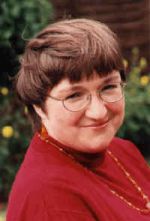
Susanna Clarke is a writer. From talking to her it appears that nobody is more surprised by this fact than she is. Having worked in publishing for twenty years she released her first novel, Jonathan Strange and Mister Norrell (Bloomsbury) in 2004, and that the rest of the world took for granted she was in fact a writer amazes her. She is a writer and an incredibly good one at that. She was in Dublin in March as the guest of honour at this year’s Phoenix Convention. Fantasy author Juliet McKenna interviewed her and we were there to cover it (i.e. Dave Hendrick recorded and transcribed the interview).

JMCK: You didn’t read (study) English?
SC: My Mother is an English graduate from Oxford and an English teacher and she told me don’t read English, because you can always read what the English tutors have to say in their books, which I suppose is true but that’s true of any degree. Although it’s not like you’re going to, so I don’t really know if that works out. In a way having become a writer I really am rather glad I didn’t read English because I know from Colin’s experience, and from other writers who have studied English at University, that they have to go through this process of unlearning some of it in order to begin writing so as not to begin criticising and analysing what they’re writing the moment they put pen to paper.
JMCK: Yes, I couldn’t read Mansfield Park for ten years after studying it. St Hilda’s College Oxford, has a splendid track record for producing fabulous authors, and Bradford. I gather you had a false start with a crime novel set in Bradford?
SC: I did. I was a big fan at that time, we’re talking sort of the late eighties, of Ruth Rendell and I still think she’s a fabulous writer. I really loved detective novels and I really wanted to write one. I had also for years wanted to set a book in Bradford which is a very interesting town. It’s so up and down the hills and at night the street lamps sort of coil so you see the patterns snaking ‘round the hills. It’s an amazing place, plus when I was there, I suppose, in the late seventies the ruined industrial landscape was still there which was kind of romantic in a very sort of grim way.
JMCK: As we know it’s grim up north.
SC: Yes, it wasn’t grim in so much as there were grim elements and I found it a good place for a detective novel but it just didn’t come. Looking back I could see where fantasy and surrealism kept trying to creep in and you can’t really have that in detective novels.
JMCK: Which brings us to the Arvon Foundation course you went on because, from reading various interviews and articles, plotting is a big element that you got from that course. What directed you to Arvon in the first place?
SC: Having given up this detective novel, I’d given up writing for, I don’t know, maybe a month. I was fairly sure I wouldn’t become a writer, but after about a month I was fairly sure the obvious thing was to try and write a fantasy novel, because I’d just re-read Lord of the Rings, and these magical books (CS Lewis and Ursula Le Guinn), and see what happened, I was at that point in Spain and I came back to England and was looking around for a job. I thought I really ought to go on a course, a fantasy writing course so there were two courses one by a fantasy writer – was it David Gemmell? – and the other one was run by these two guys I’d never heard of, Colin Greenland and Geoff Ryman, and to be honest I don’t know what I got from the course – except possibly Colin (Susanna’s Husband). I remember Geoff Ryman doing this wonderful sort of seminar on how to plot a book and he used a piece of paper about that size (points to a flip chart) and he drew a diagram but he didn’t remember to turn the diagram around and show the audience. And nobody really liked to say anything. But it was a great course just because they made me write a short story which I rather resented, because I wasn’t really interested in short stories so I came up with this idea of writing a story with my two main characters, or rather just one of them Jonathan Strange. I thought that way I’ll get them to read a bit of the novel.
JMCK: The novel was already gestating at this point?
SC: Yes, yes and I’d written bits, but I thought a short story may force them to discuss the novel although they’d want to talk about short stories so I wrote The Ladies Of Grace Adieu and I sent it to them. I think they asked for five thousand words and I think it was eight (thousand) and I hoped they wouldn’t notice.
JMCK: Which brings us to one of the other things that crops up in everything that’s been written about the book so far which was it took ten years to write. The hardback I have is 728 pages long. Presumably your word rate was faster than 72.8 pages a year so how does a book take ten years to write?
SC: At the beginning, although I’d been trying to write all my adult life and had written in the early eighties about a hundred pages of another novel about angels in Liverpool and then bits since then, I’d never actually completed anything but this one short story so for the first two or three years I would write these sophisticated pieces and take them to my writing class and say look this is my novel. I would read them out and they would all sound pretty swish but they didn’t join up and there wasn’t any continuity. It was all sort of fragments, so the first three years I was learning to write. And there was a point where I had to look at what I’d written at the beginning and thought this is just scraps and start again. That was actually quite hard. It took a long time to write the first four chapters as in almost giving up because it was so tough. I still don’t write necessarily in sequence, I write the bit that comes to me and if I have a great idea for chapter which may turn out to be chapter 52 at the beginning then I sit down and write that and it’s a matter of plotting towards these points – I don’t recommend this by the way.
JMCK: You mentioned a writing class. Some of these groups of aspiring writers are very constructed in that they are very rigorous with each other and some are simply mutual self congratulatory societies. I’ve dealt with one where people become fixed in their errors because all their friends tell them it’s wonderful - what was the attraction for you?
SC: The writing group that I went to was run by a flame haired German translator and playwright called Tinch Minter and she’s run it for years in Cambridge and it’s still going. It’s a slightly odd class in that I made a lot of friends there, there are people there of wildly varying levels and interests. The great thing about Tinch was that she could always address whoever it was at whatever level they were doing and say something very constructive and supportive. I know that for a while when I was going there there was actually a girl who couldn’t really speak English and she decided she’d rather go to a creative writing group than a English language class and I didn’t really feel that we were helping her to improve her English, but Tinch still managed to say something helpful and encouraging. I went for about a year and found that it gave me what I needed, the impetus to keep going at that difficult starting point and after a year I felt what I needed to learn was how to write longer prose and so I stopped going because I wasn’t going to get that, but it was a very good group.
JMCK: Did you have to do a lot of reverse engineering because you were writing pieces out of sequence?
SC: Not really, the world grew, the great thing about having ten years is that you have time to think about the world. I guess it took me eight years to write the first half and then the second half probably took me less than two years, but that was because I knew so much about the world at that time. I just have a, I don’t know if you’d call it an intricate mind, but it’s a mind that wants to complicate everything. I go off at diversions at every stage. I wanted to build up the detail because I felt it would make the magic more real, the world more real, and I wanted the reader to feel that they were reading a story not in a fantasy world but in the real world. So I was glad to do the intricate stuff because it comes naturally to me to be writing and think ah the interesting thing about that is but the exception to that is – and the detail comes naturally.
JMCK: Hence the footnotes?
SC: Hence the footnotes. I could have done that several times over footnotes to footnotes but I restrained myself, you should be grateful.
JMCK: One of the things that, didn’t put me off, but about the publicity was Harry Potter for Grown ups to which my knee jerk reaction was “ugh that’s unoriginal it’s a big fantasy book by Bloomsbury”. Then I read the book and actually I could see one way in which that was true in so far as it’s a fantasy book for people who don’t read fantasy. There is an awful lot of your classic sword and sorcery fantasy but you will get the most out of if you haven’t read lots of sword and sorcery and this is also true of Harry Potter. There are many other differences but we won’t go down that road. Did you deliberately set out to write a fantasy novel that would be accessible to people who don’t read fantasy? Why didn’t you opt for swords and sorcery and heroes on big horses?
SC: Largely because I hadn’t read any. I’m a very slow reader, and the fantasy that I have read is the classics, CS Lewis, Tolkien, Ursula Le Guin and beyond that an awful lot of it is comics, Alan Moore, Neil Gaiman, so I didn’t really have those stereotypes, those genre bits and pieces to draw on plus I was writing very much for myself. I was creating a world that wasn’t just drawing on those, it was drawing on Jane Austen, drawing on a feeling that I wanted to write about Northern England and I wanted to write about my feelings about the North. So there were a lot of ways in which I wasn’t very interested in writing a fantasy novel, but there were a lot of ways in which I was, because the book’s about magic. There was a very limited pool of classics I was also drawing on other writers from my childhood, Joan Aiken, Leon Garfield etc. Some things come from The Name Of The Rose by Umberto Eco because buried in that book, as an important plot point, there’s another story about the Cathar Leader, who was leading a revolution that was put down 20 or 30 years before the action of the book and there was this story of this character, this Cathar leader, who never appears in the book. I don’t even think any speeches of his are reported in the book, but he is a major figure, a very compelling figure and that’s the idea of the hidden character who never appears which I think I got from that one source as being very important. In Strange and Norrell where the Raven King, John Uskglass is a huge influence on the book but is buried quite deep within it but that’s true also in my short fiction as well.
JMCK: You talk of comics, and you described the likes of Bradford coiling upwards. It’s a book full of incredibly vivid images where do you get your images from? Do you think you write in vivid terms.
SC: Yes I think so and I’ve always loved fiction which presents something you haven’t quite seen before or something that you’ve seen many, many times but in a slightly new way. So yes I’ve drawn on fiction like that and I’ve tried to get those rather filmic images into the book. Another important writer to me is GK Chesterton whose Father Brown stories and The Man Who Was Thursday are full of these most extraordinary and very simple almost heraldic images of London landscapes and fields, but just adds acrobats falling from the walls in fanciful costume - very, very vivid images. So I try to get that in.
JMCK: PD James famously starts her books always with a place. Do you get ideas from things you’ve seen? I’m thinking of the magic in York Cathedral or the Gentleman with Thistle Down Hair, can you pinpoint the origins of that?
SC: The Gentleman With Thistle Down Hair may have come from a picture Charles Vess drew for Neil Gaiman’s Books Of Magic series. He drew the third book of four, which was about Fairie, and there was just an image in the graphic novel of a woman with very similar hair, a fairy woman, so I think it came from that. I’m not aware of it usually at the time I don’t do it consciously, but sometimes when I think back or find the book where I got the idea I recognise it. I’m a very magpie writer, I pick up things I like from other peoples work and I nick it.
JMCK: It’s called an homage I believe. Talking of visual aspects one of the striking things about the book is the illustrations. At what point did the illustrations become part of the book?
SC: I met Portia Rosenberg quite early on while I was writing the novel. I went to a Cambridge open studio, there was a picture of hers in the catalogue that she did of Cinderella, and it looked quite extraordinary so we went along, and I think she’d done some illustrations for herself of Oliver Twist and some of Cinderella. Which if you think about it, if you took Oliver Twist and Cinderella and put them together you’d end up with something not dissimilar to Jonathan Strange & Mister Norrell. I didn’t say anything to her at the time as it was her moment and she was having a wonderful day. People were coming up to her and saying they’d seen her illustrations and were just knocked out. So it was not really the time to say actually I’m writing a novel… but when it was time to sell it I think I’d written the first two parts and my agent was thinking of sending it around to publishers he said to me it might be an idea to get some illustrations done, I don’t know why he thought of it.
JMCK: It’s a remarkable thing for an agent to say.
SC: And I said I always thought it would be great with illustrations as it would really intensify the idea that this is a 19th century book. I told him I knew of someone who could do it and he said, and this is like an agent, would she do them for free? And I said she might do. So Portia did five and I said I cannot guarantee it will lead to something, but at least it will get your work in front of several publishers, and when Bloomsbury bought the book I had a conversation with the editor and asked what about the illustrations and she said, the kind of thing that editors always say, which was that the readers will want to imagine the characters for themselves. And I said well it didn’t put people off Dickens and I just talked through why I thought it was important and bear in mind I’d worked in publishing for 20 years. I worked in a small office for a very large company Simon and Schuster and I was a managing editor and used to going to meetings and really putting my point across, hearing people say “that’s fine but we’re not going to do that”. So I put my point across really forcefully to my editor and she said “that’s fine”, and I thought “but we’re not going to do that”. Then I found out later that what she meant by fine was ok and this I found really strange. It was wonderful; I still don’t know why they did it. I mean they had this huge novel from this completely unknown writer. I it was a fantasy novel, and they don’t do fantasy in their adult division so why add Illustrations to make it even more difficult?
JMCK: And footnotes.
SC: And footnotes, what I told them was that adult readers are perfectly able to cope with illustrations and very few people have breathed a word against them.
JMCK: One of the great myths, certainly in my experience, is if you’re going to get on then you have to know somebody in publishing or if you work in publishing there’s an instant entrance. Nothing in my experience has ever indicated that this is true, and in my experience I can’t see a direct line between editing cook books and becoming a published fantasy writer, so was the book finished when Bloomsbury took it on?
SC: No, the first two thirds were finished and I was working on the final volume.
JMCK: Were you left to write it without editors looking over your shoulder?
SC: I was left completely alone. I think they had a synopsis, but I think it was somewhat vague as to what happened in part three. Certainly there was a lot of stuff that went into part three that nobody knew anything about but they (Bloomsbury) were patient and quiet. It was a bit late, it wasn’t dramatically late, I think it was due in July or August and I ended up delivering it in September or October and they were completely cool about it.
JMCK: When did you first get an inkling that it was not so much going to be a book as an event?
SC: I think it grew gradually. It was when I went to meet the people at Bloomsbury, and they introduced me not only to my editor, but to the sales director and the publicity director and the managing director and lots of other people and a lot of them had actually read the manuscript and I knew that this was not normal. And I suppose it was my publishing background that informed me on it because when people walk up to a brand new author and start talking about their book saying “this is what we’re going to do”, I was thinking this doesn’t normally happen. The personal assistant to the MD said to me after the meeting, “I was watching you then and you just looked stunned”.
JMCK: Has it been a two edged sword because presumably Bloomsbury are saying ok can we have another one and please can we have it this decade?
SC: That’s the thing about Bloomsbury, I think they’re remarkably old fashioned in some ways they’re the sort of publisher I’d hoped I’d work for when I first got into publishing but never actually did. They’ve a great understanding of authors and have great patience with authors. I think it helps that they published Donna Tartt’s second book which took ten years and they didn’t seem particularly worried that it took them ten years. But yes I do sort of have a schedule now, but I’ve had some ill health over the past year so I haven’t been able to do any writing for a while and they know that and they seem pretty cool about it.
JMCK: It’s not only been a success in these islands, but also in America and elsewhere, and it’s been published in how many countries?
SC: I think the number of languages it’s been translated into is somewhere over 30, but apparently quite a few countries have two languages; there’s simplified Chinese and complicated Chinese and there’s Spanish and Catalan and then there’s also this thing in France where they sell the paperback rights to one company and the hardback to another so it all gets very complicated, but I know when you add up the number of publishers it comes to 30 plus.
JMCK: It is famously a book on English magic. Neil Gaiman in his writings about it stresses the importance of that. Have you had any feedback as to how that has translated, or how accessible other cultures have found the Englishness of it?
SC: I was amazed when the Koreans started buying it, because what sense is this going to make to people in Korea or Thailand, but 19th century English novels apparently go around the world and people read them so there’s something there. I think the archetype of the snowy Yorkshire moor and the stage coach coming around it is familiar to readers around the world and the book draws on a lot of 19th century literature as well as fantasy.
Audience Member questions: You mention Neil Gaiman and Alan Moore as influences you obviously read a lot of comics is this something you feel you might have a go at yourself? Writing a graphic novel maybe?
SC: I’d love to write a graphic novel. Neil Gaiman who came the other way – he wrote comics and then novels said novels are much easier than comics – which I believe. It seems absolutely obvious, you can’t mess around with footnotes or long descriptions, you’ve got to fit everything into a panel, and there’s got to be at the end of the page a reason to turn the page, so it’s something that I might do but I think there are other things I need to do first.
Audience Member: What came first?
SC: There are sort of two things that came first, although I don’t remember the chronology. I’d had the idea of having a chronology of magicians that I would embed into English history and one of these ideas was that there would be a magician who had no name and who was very powerful and mediaeval quite a long way back and the other idea was that there’d be two magicians who would be 18th /19th century and they would work together and would famously quarrel and thought that they were extraordinarily different from each other, but other people couldn’t really tell them apart and they eventually became Strange and Norrell so it was this idea of the chronology that came first. I hadn’t worked out the implications of making a major character a character without a name. Tolkien does it and Ursula Le Guin does it but they have minor characters who are magicians without a name whilst I have the Raven King who’s really rather important, so he’s ended up with more names than the others, he’s the King of the North, he’s the Raven King, he’s the Black King, he’s John Uskglass, which may not necessarily be his actual name.
JMCK: Were you never tempted to simply write his story?
SC: Sure, in fact my early notes are more about his early history than they are about Strange and Norrell. So the first few notebooks are filled alternately with notes about the Raven King and then about the relationship with Strange and Norrell and I opted for the latter because I’d read fantasies with the mediaeval slant but the 18th century the regency period seemed a bit more unusual.
JMCK: You make some unusual choices throughout the book? You’re quite merciless with your characters. Innocence is of little or no protection. Was that a conscious decision?
SC: It’s quite difficult for me to do. I think you were saying at an earlier panel that a lot of beginner writers write around the big event. If their characters are coming up to something traumatic you sort of deflect it and then avoid it. I knew it was the wrong thing to do so I think I sort of over compensated.
JMCK: One of the other tensions in the book is that it’s a very funny book but there is also some absolute horror in it, were you ever tempted to go much more into the broad comedy or much more into the outright horror?
SC: No I think that is maybe something I got from comics. It’s not something I got from Joss Whedon, but it’s certainly something I admired about Buffy the way they could go from the silliness to the real heartache and the world ending in a heartbeat. I love that juxtaposition of light and dark.
JMCK: Did you have any qualms about writing the line “and on the third day she died” because that for me is a real heartstopper?
SC: It was quite hard to do, but it was necessary. Some of the things that happen, I think particularly to the female characters, are drawn from Scottish, English and Irish folklore. Women and innocents, when they come across Fairie, do have a hard time.
JMCK: Where is it written that life is fair? I say that to my children all the time. So what next, what will we all be reading next? The story of the Raven King?
SC: That’s tempting. I may get to some of it but not immediately. What I’m working on at the moment starts a few years, not many, after Strange and Norrell finishes, but will mainly focus on different characters. It’s the continuation of story of the world rather than the continuation of the story of Strange and Norrell. In the meanwhile there will be a collection of short stories, The Ladies Of Grace Adieu.
JMCK: Do you write your own blurbs?
SC: I rewrite them.
John Mosby goes through a looking-glass darkly to look at the process that brought Neil Gaiman and Dave McKean’s Mirrormask to the screen and talks to McKean about the practical magic of CGI.
Mirrormask, out in UK cinemas this month and already out on DVD in the States is the sort of project that combines the old with the new. Older audiences will spot some similarities in premise to Henson’s earlier work, Labyrinth, but the visual style here is much more complex, surreal and twisted. Dave McKean’s vivid and dark imagery that most comic fans will recognise from his comic-partnership with Neil Gaiman gets expanded to fill the whole screen.
“It started with a phone-call from Lisa Henson, who is Jim Henson’s daughter. She had this little window of opportunity from Columbia TriStar (as they were then) in America. They were in the middle of Muppet deals and they fancied doing another fantasy film. Someone in the book-keeping department had noticed that the two films that Jim made - Labyrinth and The Dark Crystal - were very expensive and not very successful, but over the (subsequent) years have become enormously successful. They’ve continued to find new audiences and people love them still. So someone said ‘We should do another one… but for a tenth of the budget of The Dark Crystal twenty years ago!” Dave explains.
The film deals with Helena (Stephanie Leonidas) the daughter of two circus-performers. When her mother (Gina McKee) is taken ill, the threat of closure hands over their heads as her father (the ever more versatile Rob Brydon) struggles to keep everything together. Helena starts to withdraw into her own world and sketches, but one night she finds herself drawn far too far into that world and her adventure ‘through the looking glass’ quickly becomes a Dali-esque nightmare with familiar faces but new situations. Think Labyrinth meets Lost meets that really strange dream you had after a dodgy pizza while reading Sandman. Was the classic running-away-to-join-the-circus a factor of his own childhood?
“It wasn’t my dream. But we just went to see Circe du Soleil at the Albert Hall, so it’s my son’s current dream to run away and join the circus. I don’t know if it’s a dying art, it seems to be having something of a resurgence at the moment. All the circus performers that we got involved in the film were happy for the work, but already had work around. It was my dream to run away and make films…” he shrugs.
Most movies take a good couple of months, at best, to shoot with extensive work later. In the case of Mirrormask, the post-production work was far and away the bigger challenge. A good three quarters of the film is set in a fantasy world and that provided some unique challenges for the long-ish schedule.
“Longish is an understatement. The shoot was about thirty days - six weeks. A week on location in London doing the circus and the hospital and that kind of stuff. A week in Brighton doing that amazing block of flats that my producer found… this beautiful decaying cancerous building (it’s now totally done up, the residents got together, so it’s the last time it will ever be seen that way) which was an astounding place to walk around. Then four weeks in a green-screen studio. We had budgeted, very frugally, for eight months of animation post production… which turned into seventeen months. We still arrived a squeak under budget, which was a bit of a magic trick. It was nightmarish. It just went on and on. There were many, many phone calls home to my wife saying ‘This is impossible and we should just admit that to ourselves now, pack up our few remaining marbles and go home!’. But it finally staggered over the finishing line.”
Budgets are everything, but does a film like this benefit from a relatively small budget, because the creators have to figure things out more creatively, or would they have welcomed more cash?
“Interesting question… when we started (the budget) was $4 million / £2.6 million. In the months where the film was being written and going through the works at Columbia, we lost a chunk of money. The dollar plummeted. We’d begged them to buy pounds ‘NOW!’, but they didn’t. So we lost a few hundred grand on that. But it was great knowing that budget. It was great because you knew where you could put the money and things to avoid. There are two big things that are expensive. One is photo-realism. If you want something to be absolutely, believably realistic - lit so all the bounce light is correct, the model is such a level of complexity that it fools the eye into believing it’s real (which is a staple of big Hollywood movies) then it’s just time consuming. It’s all possible and it’s relatively to do, but it’s just time consuming. That’s where the money goes. To be honest, I wasn’t so interested in that. I was interested in something that looks like a drawing, an illustration… it’s not trying to be real. It’s in her imagination, made from the drawings on the wall. So once you make that choice, after that, it’s fine. If you were trying to do a CGI wolf, we all know what a dog looks like and how it moves. It only needs a whisker out of motion and you go ‘Oh, that’s not right!’ It’s hotwired in our minds how things work. If we’re not trying to do that, if we’re just trying to make something that has its own qualities and fell then that issue is never a problem…” he explains.
How did the actors cope with such a CGI-heavy atmosphere? Dave says that some did better than others, but that they all rose to the challenge of acting to things that wouldn‘t actually be created for many months to come.
“They weren’t so much problems. But it’s difficult if you are just in a big room and there’s someone jumping up and down in front of you with a little scrappy drawing, trying to say ‘Behind you is a palace and a staircase, over there is a chicken, over there is a red troll. At one point Rob Brydon said ‘I just can’t do this!’ and had a little panic. But they were fine in the end. I’d say that Gina McKee was the most experienced of them all and she had an ‘interesting’ time I think. I talked to her a little about it when we were done. There was some friction between us on what we were trying to do. She’s never done a film like this before… never done a blue-screen or FX film before. She’s done these wonderful dramas. I saw in her in Wonderland, the Michael Winterbottom film and she’s great. She said, “Look I know film inside out and backwards, I’ve been doing films a long time and in the first hour I can see what the rhythm of it all will be, who the people are I should be talking to, what is being shown, what lenses…” she knew it all… but she never quite got the gist of this one. Every day would go by and I’d be saying ‘I’m afraid you’re going to be a sixty-foot floating head, so I need you to stay still.” ‘Okkkay… do you want me to act at all?’ ‘I think your mouth is going to survive the editing process but I’m not sure about the rest of you’. I think she found it a bit of a challenge, but I think she kinda enjoyed it. I’m really not sure she’s really like to jump onboard a Star Wars movie or something like that…
You would think that his long collaboration with Gaiman, who wrote the script for Mirrormask, would benefit the project but though it helped in certain areas, the two men began to realise that they had different approaches to their work. Where the boundaries of each other’s realms were clearly defined when they worked ‘together’ on comics; here that process meant physically combining their talents too and McKean admits there were some initial, but solvable problems.
“There’s tons of things that Neil was planning - even some stuff that looked simple - that I knew would really cause us problems. So I didn’t necessarily want to write it, I just wanted to be in the room… to say: ’you’ve got two armies coming together coming together here, we can’t have that… we CAN do a cat!’ (laughs). As it turned out, we both pitched in ideas and we had a table full of ideas and sounds and images. We put it together between us. But THAT’s where the conflict was because we’d never done that before. Actually, we’re completely incompatible with each other…”
As for the future, Dave has enjoyed this first real sense of film-making, but will consider his options carefully as to where the next step takes him.
“I’d just like to make a good film, really. This one, to be honest, feels like film school. I pretty much had to learn from scratch and made every mistake in the book. I’m sure that next time I’ll make lots of new mistakes, but not repeat the old ones!” he smiles. “I’d like to make a film that really feels like mine. This one has a lot in it that I enjoyed a great deal… especially wandering around the city. There’s a lot about this film that doesn’t feel so much like my turf, so I’d like to do a film that really feels like mine. I’ve got to know a couple of film directors now and it feels like a life-long thing. You never quite get to make your perfect film. With illustrations its different… you could also say that it’s impossible to get perfection in a comic book, but I’m in complete control and any mistakes are utterly mind and nothing to do with anyone else. I love doing that and it’s wonderful to be able to do that… and a privilege to spend my life doing that.”
John Mosby attends a press conference for King Kong
Look up to the skies… wait, what’s that hairy beast at the very top of one of the world’s tallest buildings??? If you think it’s King Kong… well, you wouldn’t quite be correct, because on one day last year the figure in question was actually its director Peter Jackson. Though the Empire State Building is a regular tourist attraction, it rarely allows anyone above the normal viewing platform made famous by such films as Sleepless in Seattle. The Rings director was a welcome and understandable exception to the rule…
“We did that because the end of the film is obviously taking place in a studio on a small piece of Empire State Building, on blue screen. Naomi and Fran (Walsh, Peter’s wife and partner) and I went to New York and went up the real Empire State Building. We thought we had to do it, to see what it felt like. Naomi’s fingernail marks are still on the side of the building today,” Peter smiles. “It’s not where the tourists go, with the observation decks, it’s like in the movie where Naomi runs out of the doorway and she’s on that little circular balcony bit, that’s where we got to go. There is no safety rail, there’s a drainage grille off the floor, it’s falling over height, easy. Fall backwards and it’s all over.”
“It’s about four foot high….” Naomi adds. Clearly remembering the view… and the potential danger. “And it was a windy day and the ledge only comes up to your waist. I didn’t think I was afraid of heights but I’d never been up such a great height as that.
“I asked the Empire State people if I could go up to the very top, as a King Kong fan, so they unlocked these doors. There’s a step ladder up to the flat bit on the top of the dome which is about six foot in diameter, and you go up through this trapdoor. I got to stand on the very top of the Empire State Building - which was a real big thrill for a King Kong fan,” Jackson beams.
Jackson’s film, arguably his magnum ape-us as it were, has largely been well received by critics - though many agree it could have been trimmed slightly for length around the midriff. But for Peter it was a clear labour of love, recreating the magic he’s first witnessed as a child and adding the imagery only available in this new century of film-making.
“As a filmmaker, you’re making films because you want people to enjoy them. There’s no other reason. I’m not a filmmaker with a message to tell, or something I want to impart upon the world. I just simply want to entertain people and I’m always pleased when a film I’ve made gets a reception and people enjoy it and seem to like it.”
“This particular film, as you say, is sort of a lifetime ambition of mine because I was inspired by the original King Kong when I saw it when I was nine years old on TV. Then three years later, when I thought I’d developed the necessary skills, I borrowed my parents’ super 8 movie camera, made a little model of Kong out of wire and rubber and my mum’s fur coat supplied the hair, and I started to do a remake of Kong when I was 12. I didn’t get very far. It was a little bit ambitious. I actually switched from that to doing a remake of Monty Python’s Flying Circus and went through the years becoming a Ray Harryhausen fan, stop-motion animation . . .it was really monster-making. I loved creatures and monsters and eventually found out what directing was, but always harboured this desire to one day - if I was ever lucky enough - to remake King Kong.”
Jackson and his team needed to walk a thin line. They wanted Kong to be sympathetic, but not so humanised that he was a caricature of an actual gorilla. He had to be both savage and sympathetic.
“It was an interesting combination, because we set about wanting to make him a gorilla as opposed to a monster,” Peter explains. ” Godzilla is a monster, Kong is not. Kong is a gorilla and the gorilla’s characteristics and their behaviour is actually very interesting and it leads to a lot of ideas that you can incorporate in the scenes. But obviously we are also filmmakers and we have to achieve certain results, and so there’s no doubt that there are little bits of cheating that you do here and there to make a moment work in a scene because the scene requites that moment to work. If it’s not something that a gorilla would naturally do we certainly tried to make it look as close as possible to something you could believe in.”
Kong was a creation of both CGI and Andy Serkis once again (literally) getting under the skin of a character that would only be fully formed later in production.
“When you see the movie, every single close-up of Naomi when she’s looking at Kong - of which obviously there are many - she’s looking at Andy’s face. He was up a cherry picker or on a ladder, somewhere where he needs to be so Naomi always has Andy to look at. And the other side of green screen is creating environments, so instead of being in a rainforest somewhere in the miserable cold, with the sun going down behind a hill and us not having enough light, we decided to control our situation. So our jungles were built in a studio, which meant they were surrounded by green screens. But we had art work and sketches that we were able to look at to see what the invisible environment was going to offer the movie. So the green screen involves the environment, and it also involves the characters. We sort of had both of those covered in different ways.
“I still didn’t wrap my head around it completely, until I got to the set, but I was relieved that I wasn’t going to be looking at a tennis ball on a stick moving round the stage!” Watts smiles. ” Obviously Peter, having done it for seven years, I knew it would all be very worked out and that was true. The moment I got to set, I could see the tools they had created to facilitate the imagination. But you didn’t give me any dinosaurs to look at…”
“No, but we did you give you that big polystyrene head to jump on….” he laughs.
Jackson also changed the gorilla-damsel dynamic, making his Anne Darrow less passive and more emotional.
“It was not so much deliberate going in, but the relationships between Ann Darrow (played by Fay Wray) in the original movie and Jessica Lange in the second film and what Naomi does now - they’re actually three different relationships. It’s the same story, but three different types of things going on. Certainly with Fay and her character it was a case of an unwilling kidnap victim. She never really felt comfortable being with Kong, was always terrified of him and always screaming. There was never really a sense, in the original movie, that she really connected or understood Kong. The Jessica Lange one was kind of a weird 70s sexual innuendo. They camped up the sexuality of it more than anything, which we didn’t want to do. So we created our one with a foot in neither camp, really.”
“To me, the most interesting thing about a story like King Kong when you’re thinking about it at the beginning, writing it before anything has really happened, to me the most interesting doorway to go through is the reality door. It’s to say ‘okay, if you were on this island and you got kidnapped by this gorilla who is intent on killing you, how would you actually respond?’. There’s not a lot you can do. You’re in his hand, you can’t get out, your options are very few. How would you feel, and what would you do. If a little window of opportunity came up where you may be able to survive - it’s not even surviving, it’s staying his hand. If you can keep him curious, if you can engage him on some level, that’s you getting squashed then you’ve got a little, minute opportunity of staying alive that you can work on and develop that…”
Peter has promised himself some time off. Rings and Kong have taken over a decade of his life and even the slimmed-down version of Jackson (looking more like Spielberg these days than his old hobbity demeanour) needs the rest. His next cinematic project… possibly a little film. The sense of relief from his team is obvious.
Fractal Matter was created as an online magazine free and accesible to everyone. We review films, comics, tv and other forms of multimedia.

 mail
mail