
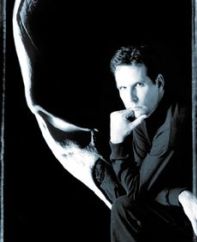
Todd McFarlane has been there, seen it done it and bought the t-shirt!
In fact as head of the McFarlane group of companies he most likely designed, made and sold the t-shirt too.
A comic book legend, Todd is an instantly recognisable face in many industries including toys, video games, music videos, comics and movies having come a long way from his first job pencilling Scorpio Rose in 1984 for Marvel / Epic. Later, Todd’s pencils and covers for Marvel’s Amazing Spider-Man led to Marvel creating a new title that Todd could write, pencil and ink, Spider-Man. The title broke industry records in September 1991 becoming the biggest selling comic book of all time, selling a staggering 2.5 million copies.
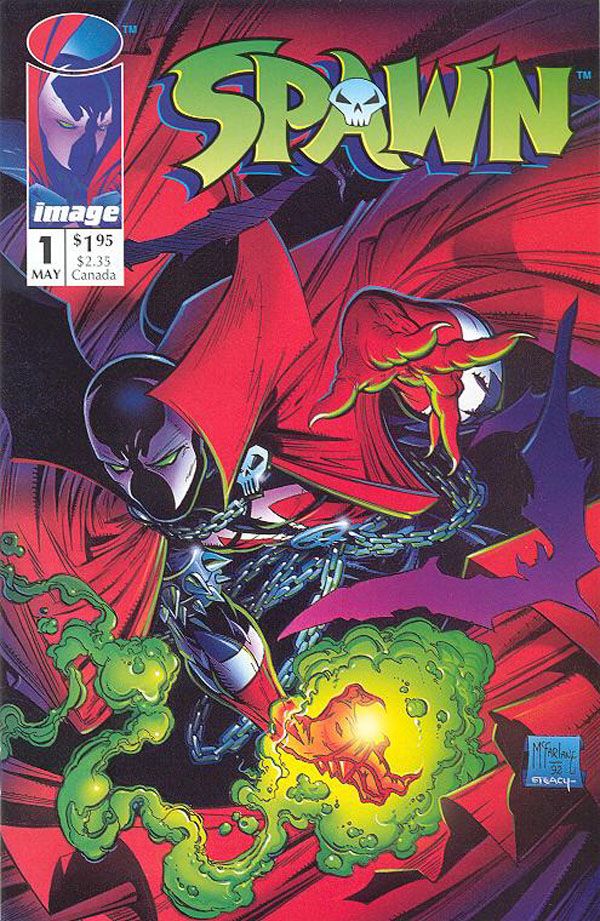
Then came revolution when at the height of their success the seven biggest names in comics quit their jobs at the house of ideas to form Image Comics. Image Comics was to change the industry and Todd McFarlane’s career forever. Launching his first title under the Image banner Spawn sold 1.7 million copies making it the biggest selling independent comic to date with Todd on pencilling and writing duties.
In September 2005 Spawn reached the milestone issue 150. Spawn became a cornerstone in how comics and comic related merchandise were created and when Todd was unable to find a company visionary enough to bring his creations to the toy market, he set out to revolutionise the toy industry by creating Todd Toys, later to become McFarlane Toys. McFarlane toys continues to innovate and lead where others follow and attracts licenses from TV, Movies and literature.
Not content with comics and toys Todd then turned his attention to cinema as Spawn hit the big screen. Spawn: The movie grossed 37 million dollars in the first ten days of its US release. Todd also ventured into music video, winning awards and nominations for his work with bands such as Pearl Jam and Korn.
Todd McFarlane’s vision and drive is relentless as he enters and new era for the comic incarnation of Spawn, the character he created when in High School, driving the book forward with a new writer and new artist.
With a second Spawn feature and new animated series on the horizon and continued innovation in toys and other media, Todd takes time out from his hectic schedule to speak with Russ Sheath about Spawn and all things McFarlane past, present and future….
Many congratulations on Spawn Issue 150. A huge achievement for an independent comic book, and for you as Spawn’s creator, what does this milestone mean to you, 13 ½ years after the first issue?
What it means to me, first and foremost, is longevity. You can argue that just because you’ve been around a long time doesn’t mean you’re good. But as someone who has lived in this world and had to swim among the sharks, I congratulate anyone who can pick any genre in any medium and survive for decades at a time.
Let’s take the rock band KISS as an example. Are they the best music band that we’ve seen? No. Are they the most entertaining? You actually could make that argument. Have they – out of the thousands of bands that have appeared since 1975 – been able to continue doing their gig? Yeah. Say what you want to about KISS, but they figured out how to swim among the sharks for decades and decades.
All I am saying is that although there is a great accomplishment in doing what I did, that doesn’t necessarily mean I’m patting myself on the back, or that my book is any better than a lot of those that have come in the last 13 years. But very few have been able to keep a book going for 13 years. Even Marvel and DC start and stop a lot of books that don’t keep going for 13 years. The sense of pride is just being able to survive in a pool of thousands of other comic books for as long as I have, and to do all that in the same place – Image Comics.
Tell us about Spawn as a character. When did you come up with the concept, and how has he changed from your original design? Do you have a master plan for Spawn? Do you ultimately know where he is going, and what his story will be?
Initially, when I started the comic book, I wasn’t as fluid with him as I became. I first conceived the idea for the character of Spawn when I was in high school. The original costume I drew for Spawn in high school is essentially the same, other than the color, which was originally blue. As I gained more experience, my drawing became more fluid.
Do I have a master plan? Yes. Do I know the end of the story? Yes. Do I hope that I never have to tell it? Yes. I have conceived of the ending of the character, but the only way I would tell it is if nobody cared about the character anymore. I’d do it in a double issue, and literally finish up the storyline.
A lot of what you’re going to see in the next 50 issues are bits and pieces that were laid on the path in the first 149 issues. I can actually go to specific issues - Go to issue 88, page 3, Spawn said this - but it was a throwaway line, but since I was writing, I remember it.
Hopefully, done right, I won’t ever have to tell that story. Maybe I’ll write the ending down on a couple of pieces of paper and someone will read it at the reading of my will. But I am hoping that Spawn, sort of like Superman and Batman, will outlive the creator. I’ve always said that – Mickey Mouse is still alive, but Disney isn’t. His creative children have surpassed his longevity. I hope when I’m dead that Spawn is still dead, and somebody else can figure out what the ending is – although I will have it hidden in a vault someplace.
What were your initial thoughts when you realized this anniversary was upon you?
The thought originally for #150 was that we needed to do something different.
There have been four other marks along the way – Issue 1, Issue 50, Issue 100 – the century mark. As we neared 150, Spawn has sort of lost some of its lustre. We needed to shake it up, turn it on its head. You’re seeing that now with bringing on a new writer and a new penciler, and pushing it into a new direction … I would say, a more focused direction.
A lot of what you’re going to see in the next 50 issues are bits and pieces that were laid on the path in the first 149 issues. I can actually go to specific issues – Go to issue 88, page 3, Spawn said this – but it was a throwaway line, but since I wrote it, I remember it. I just was never skilled enough to take those hundreds of ideas that I have in my head and put them in a queue, if you will, and just start knocking them down one by one. I was so scattered with all of this big mythology, which I have – I can talk about Spawn in grand terms for hours. That was one of the reasons we hired David Hine. I gave him all of this verbal vomit for hours and hours, He said he was going to go read the first 149 issues, and go find those nuggets.
We now know not only what direction we’re going after Issue 150, we’ve now made a roadmap of where we’re going to be at Issue 200.
Was it a comfortable return to a role that you seemingly, had grown beyond?
I’ll take your question as my being involved with the comic book again.
You’re right; there was a time when I had sort of stepped aside at Issue 102. From 102 to 149, I sort of let the book take on its own life, for better or worse. But I could see by Issue 140 that I was doing a disservice to the book. I was busy and I couldn’t be nearly as attentive, but I didn’t put anyone in my place to take over that attention.
I knew I had to put someone in who could focus on the book. One big step was the hiring of Brian Haberlin, who could come in and be a true editor-in-chief. What that means is that I’ve always got a glaring set of eyes focused on everything that we’re doing. I’m spending more time on the comic books than I have in years on an editorial/concept level. This means that we have two people on it, whereas at times in the past, we arguably had none. Nobody was really minding the store.
It’s cool to get involved and guide other creative people, and give them information that I’ve gathered from a 20-year career. At this point in my life, I actually find the teaching aspect a little more rewarding than doing it myself. I’ve done it. So it’s nice to have a guy like Phillip Tan, who’s young and hungry and still has some flaws. I can tell him, if you watch this and this and this, you’re going to be a contender pretty soon.
What is it about Spawn that makes it so successful?
That is a question I get asked a lot. In its simplest form, it’s because he comes from a world that is ruled by super heroes, and most of those characters are politically correct. I think there is a lot of appeal to characters that have an edge to them. This guy – you push him enough, and he’ll kill. He doesn’t want to be the hero; he wants to lead a normal life. He has his own needs and he lets his emotions dictate his policy. That would never happen to a guy like Superman – he’s too refined for that.
I think that Spawn the character can go to places where some of the bigger “corporate” heroes can’t go because they’re too commercially successful. This is why Batman has always enamored me, because he’s the guy who can go the furthest. But – he stops short of killing the bad guys, even though the bad guys are killers. Spawn can now go there.
From the outset you seemed to accept your role as a businessman with greater ease than some of your Image co-founders, were you always prepared for the eventuality that your success under the Image banner might lead you away from pencilling and more into the business element?
In all honesty, I wouldn’t say that the business end of it came with any kind of ease. It was more Darwinian. You have to learn business if you’re going to be self-employed and survive. If you’re a bad businessperson and you’re an entrepreneur, you’re going to be out of business.
The business side of it is far less sexy or fun than doing the art – coming up with the characters, doing doodles and all that other stuff. But if you are going to be the one at the forefront of driving your own art, and no one in the world is going to be doing you any favors, you have to then start creating your own favors. Those favors become finding ways to get your art to the consumer.
How do you now deliver the art? Doing the art is one step, and lots of us can do that. Now that you’ve got a piece of art, how do you then move it to the consumer to buy so you can continue to live and do more art? Some people have been able to figure out how to get companies to do that for them. That’s what happened when I was doing Spiderman – I just had to do the art – all of the other mechanisms were left to a handful of people in different divisions that I never really met.
Once I stepped out of that, then that responsibility was mine. You have two choices. Either you go, “I don’t really like they way they’re doing it,” and you do it yourself – and so it does have to be a part of the equation. If all you’re doing is business, then you’re not going to have any art to deliver. If all you’re doing is art, you’re not going to have any business to deliver.
For me, it was just a survival tactic. You can argue the fact that among some of my Image partners, I maybe became a little more fluid in the language of business. This is something that I know that the comic book community of the past has got a distorted view of. I didn’t become a successful businessman because I wanted to be rich and famous. I wanted to become successful enough to deliver the art to the consumer.
If you’re not successful, people won’t give you the chance to deliver that product. The very nature of it is you MUST be successful. Then people go, “Why should I put your comic book in my bookstore?” “Why should I put your toys on my shelf?” You have to show them the success of it.
The success isn’t about, “Cool, I can just count money.” The success is a necessity to getting the art out to it. If you go, “I did these last five products with Spawn and they all failed miserably,” the next person you talk to is not going to give me an opportunity. Especially when you’re talking to business people – all they care about is, will this thing make them money? They’re less concerned about the art. So, I must deliver a good artistic product and put it into the right channels and make it successful so that they make money, so that then I can get it into the next channel, and the next channel.
At the end of all that, I’ve got a company and an empire, and we make money. But I will tell you that there has never been one day along that process when I’ve thought, “I just want to build up a company, go public and have stocks!” No. There’s a reason why, after all these years, my company is still private. I want to be big enough to have the freedom creatively, and small enough to retain it. That’s the niche that I want.
What are your thoughts on the comics industry these days?
In terms of volume and enthusiasm and getting the world to pay attention to what we do, we’re still at a fraction of where we were in the 90s. In the early 90s, you had a bunch of speculators, but they weren’t really true fans. The success at that point allowed the outside media to pay attention to what we were doing. It also allowed people to make a little bit better living, so that they could diversify themselves – I’m a living example of that. Today a lot of artists are probably living paycheck to paycheck, and aren’t going to be able to just take off and start their own companies – they’re not going to have the wherewithal to do that.
The thought that I’ve heard over the last 10 years is that the comic book community will rebound. I’ll bet everything I’ve got that that won’t happen. This is not a cyclical thing. This is a situation where we’ve burned the public. We burned our consumer. We took advantage of them and we lost thousands of stores along the way, and potentially millions of customers. Those customers have grown up and gone on to their own lives.
The world is a different place, with all of the other forms and technology that are out there. Now, you don’t have to collect Spiderman for 10 years – you can just go to the movie and collect the DVD. There are now millions of people who enjoy the Spiderman movie, and do not feel compelled to buy anything beyond that. They don’t have to buy the toys, they don’t have to buy the shirts, and they don’t feel like they have to buy the comics. I haven’t met the person yet who went to an X-Men movie and said, “By gosh, I never collected X-Men, but now that I’ve seen that movie, I’m going to start collecting!”
That flood that we thought was going to happen was illusionary at best. Because the comic book, to the casual consumer, in my mind is just another licensed good to them. To someone who watches the Spiderman movie and thinks it was awesome, the comic book is like Spiderman pajamas and sheets – it’s just another licensed product. They can live without it. But without the comic book, there is no movie.
How do you see the future of the industry? Image was a revolution – what’s the next revolution?
That’s a good question. Given that I’ve taken a step back from it, I can honestly say that I don’t have enough of a day-to-day experience with it to make an educated guess. I think that the future is going to hold pretty much what we’ve seen in the last five or six years. Steady business, nothing out of the ordinary. Nothing that‘s going to change the entire industry as a whole, just short-term little successes that will happen from time to time. Hopefully I’ll be involved in a couple of those.
Even if 12 new stud writers and artists came into the industry and they delivered terrific books, you still have to get past the hurdle of what people think of when you say, ‘comic book.’ It still looks like a comic book; it still feels like a comic book; it’s still going to be delivered in comic book stores; it’s still going to be marketed like a comic book. I think it’s going to be tough to say, “Yeah, but this young William Shakespeare is now writing this stuff.” That’ s the hurdle. Why is this one, that looks and smells and tastes like all the others any better, and why should I go out of my way and drive 23 miles to the local comic book shop to pick one up? If I have lived all my life without collecting comic books, why should I start now?
I think it’s gonna be tough. I think it’s tough for us to now market on a wide appeal. It’s almost easier to develop a comic book and get it made into a video game and get some excitement on that.
The rejuvenated success of Marvel and now DC seems to be to the detriment of the smaller independent publishers who maybe started out sharing the Image ethos and spirit. Does that sadden you?
Let’s start with the rejuvenation of Marvel and DC – relevant to what? Remember, there was a time, even before the speculator came in. I was still doing The Amazing Spiderman, and it was selling anywhere between 300,000 to 500,000 copies. That was before everything started getting crazy and we started getting into millions.
Does it sadden me that Marvel and DC have been able to take some of it away from some of the smaller guys? Not really. If Marvel and DC have the backing to be able to deliver, get it out and get people excited more than anybody else, then on some level, God bless America. It’s the argument of Walmart. That Walmart has figured out how to do it bigger and better than anybody else – a bunch of people will say why that’s bad, and a bunch will say why that’s good. Why should we begrudge somebody who figured out how to do things in a commercial society?
Marvel and DC are just doing what they’re trained to do, which is to sell product to as many people as they can. I don’t think that forgoes anyone from doing anything independent if they do it right and they’ve got a good quality, solid product.
How important is it for you to stay in touch with the comics industry?
If I’m planning on keeping and/or building the success, then the answer is I have to be involved in some capacity. I can’t just assume that everybody else who hangs around me and works for me is going to think like me, and/or has had the same experience as me. The CEOs of companies in some instances is still the best artist or one of the best artists of all the employees – which is different than most CEOs. I can come in from a business perspective, but I can also look at it as a CEO with an artist’s hat on and see whether if we’ve got good art, if that can drive the business.
Again, as we start to go in a new direction with the Spawn comic, come up with new concepts, and drive some new books into the marketplace, I will have my nose stuck into the middle of it. Although, a lot of it will be behind the scenes, I’ll make sure that I am there as a guiding light for my creative people.
Do you still pick up comics on a regular basis? What do you read at the moment?
I don’t pick up any new stuff; I get some stuff in the mail. One of the biggest things that I’ve had to let go of is staying current with the comic books. Recently I’ve gotten a little crazy on eBay, and have gone back and picked up all those great books that I used to have. I had a great 25,000-book collection that I put into a comic book and card shop with my brother in the early 90s. I had multiples of some of the runs of almost everything that Marvel, DC and some of the independents. They were all mint. I was really anal about it. Today, my one regret is that I put it out there. So I’ve gone out there and bought some of the stuff that I’ve liked, either as quirky books, or re-looking at some of the artists who inspired me when I was a kid, trying to break into the business. I’ve sort of been getting a retrofit instead of looking at the new guys.
Gene Simmons is currently gracing UK TV screens in Rock School. You are credited as having helped rejuvenate the career of Kiss, tell us about that? How did that all come about?
By the time I got involved with them, they were doing their comeback tour with the original four members. They were rocking the planet at that point. I just happened to be intuitive enough to hook my anchor onto their boat and see if I could go for a little bit of a ride.
I was fortunate – Gene Simmons is a huge comic book fan. He is one of those guys who, in a weird way I see a lot of myself in. Some people don’t like Gene. Some of people don’t like me. But Gene has been able to figure out how to live in an industry that he loves and take over his own business. He does a lot of his own licensing and his own approvals. He comes up with a lot of stuff on his own. He’s very creative, and has been able to push it through – good, bad or indifferent. He’s taken the bull by the horns, so that now, 30 years past, you’re asking me a question about him.
Did Todd McFarlane have anything to do with keeping KISS going? Absolutely not. They were running their race at full speed by the time I got there. I just happened to jump onboard at an opportune time. Without me, KISS would have done just fine, thank you very much.
McFarlane Toys single-handedly changed the way action figures are designed and produced, do you personally have a hand in selecting and approving every toy McFarlane Toys produces?
Here is a question where I won’t be nearly as humble. I do agree that our company has changed the way in which a lot of action figures have been built. I think that the toys made by various companies would not look the way they look had I never started my company in the first place.
It always struck me as odd that the only thing stopping people from making “better toys” was the art itself. There is no intelligence to clay – it will do what we tell it to do. If you want it to look simplistic and vanilla, it will be. If you want it to look highly detailed and realistic, it will go there. You just have to have a talented hand to put it into that shape. Once you’re done with it, you make a mold from it. Again, steel molds don’t care what shape they’re in. Whether it’s a smooth surface with no detail or a guy in plaited armor with 50,000 pieces of detail on him – the steel is still just emulating what the artist did.
I was always amazed that people who have been in the toy business for 50 years weren’t doing what they should have been doing to clay. Everything that I’ve done since I started my company in the 1990s – clay would have done that in the 1970s, in the 1960s and the 1940s. Clay has always been able to go into any shape and any form. Why we gave it shapes that nobody else thought of? I don’t get it.
To me it’s not about, “Todd, how did you do it?” It’s, why weren’t they doing it? I always scratch my head; that boggles my mind more than anything else.
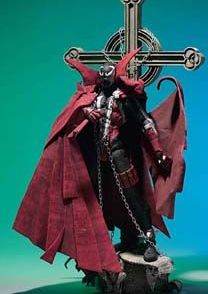
I am involved in every single toy that comes out of here, and that is one of the things that lead to my time away from comic books. I’m there at the beginning as Todd the artist, and I’m there at the end as Todd the CEO, and a lot of it in between. I approve all the various stages – I approve the paint, the packaging and how we box it up. I’m fairly anal on the toy side of things.
What toy line currently in existence would you love to get the licence for and that deserves the ‘McFarlane magic’?
It’s interesting as time has gone by that it’s not really any one line. This would be my perfect world: give away all of your Spiderman, but put in the contract that McFarlane is allowed to do one Spiderman figure. Give away all of your Batman, but say McFarlane is allowed to do one Batman. Give away all of your Star Wars, but say that we are allowed to do one of each of the three top characters. Just so I can take one strike. I’m not a greedy guy – I don’t need to do all of them, I don’t need to have the license and block anybody out. Just one time, I would love to do one Hulk, Captain America, King Kong, Planet of the Apes, Indiana Jones, Transformers.
There isn’t any line that I don’t look at where my mind doesn’t go, “If I were doing that, this is what I’d do.” I look at all of these toy lines and think, if I could only do one, this is what I would do. That would be my perfect world.
Have there been any licences that you went after and just didn’t get?
We are constantly going after toy licenses, and we don’t get them all. They may be asking too much money; sometimes a competitor beats us; sometimes we can’t get the information out of them that we need. There are some lines that we don’t get that I really wish we had. But like anything else, you can’t worry about what fish got away. You’ve got to concentrate on the fish that you have, and the one you’re going to go and chase after next.
Sometimes, there are licenses that I’m actually okay that my competitors get. I actually know that they’re going to be spending so much time and effort and money on it, and I don’t think it’s going to be successful, and they think it is. It’s actually going to be hurting their business in the long run, because they’re going to be spending a disproportionate amount of effort, time and money on it and not getting the returns on it. It’s actually going to be a chink in their armor.
What’s the most fun part of your job?
At the end of every day and the end of every month and year, it’s still creating new art, and, in conjunction with that, showing it off to the public. If you’re just doing art and nobody gets to see it, that’s a hard one for me. Some people do their art and put it in a gallery and 50 people come to see it. I don’t want 50 people to see my artwork – I want 50 billion. And once I get all of those people on earth to see my art, then I’m going to ask if there’s anybody living on Mars. The reason is not because I want to sell more, or be more famous or make more money. It’s because just like the proud papa who shows off photos of his own baby. Every time I show my new art, it’s me showing the picture of my new baby.
As I get older I realize that a lot of that stuff will never happen, because I don’t create a lot of stuff that is for everybody – whether it’s for a society, a gender or an age group. I got all that – it’s just never gonna happen. But in the back of my mind, it should always be the big goal. Why be shy showing off your art? Every now and then, someone unexpectedly will come up to me and say that they saw it – I’ll be in an airport in a foreign country and somebody will recognize my name and say, “I’ve seen it.” We live in this little cubicle here in Arizona, and some guy halfway around the world saw the end result of what we do, and they liked it.
Last movie you saw?
I’m going to change the question a little bit. The last really GOOD movie that I saw was Crash. I was never a fan of action movies, even when I was a kid, because I see most of them as farces. When I broke in as a comic book artist, I was drawing bazookas, monsters and alien invasions. Everything that I see in these action movies, I draw. If I just spent 12 hours drawing a space ship, that’s the last thing I want to see.
My taste in movies – even when I was in college – has always been movies which to me are completely grounded, where other than a little bit of Hollywood flavor, I think it could have happened.
I am way more enamored with and envious of somebody that can write real people than somebody that can blow up a planet. Blowing up the planet – that’s the easy part of a movie. I mean, I can teach my mom how to do that one. Creating people who live on that planet that you care about when that planet blows up – that’s the hard part. For example, I just don’t believe that James Bond can do that with his car any more than I believe what can happen in the comic books. So to me, James Bond is just a plastic character. I don’t believe that he’s ever in danger. There is no anxiety for me. And he will always get the beautiful woman. Other than to watch another special effect – I don’t need it. I can draw special effects.
The odd time is when I’ll run across a movie that actually gets you sucked into who the characters are AND there’s a fantasy element on it. To me, Alien did it. Aliens did it. Enemy of the State with Will Smith was a smart movie. Another smart movie that a lot of people didn’t see was Arlington Road.
Last CD you bought?
Here is one of the great voids in my life: music. As a kid who played sports, was drawing, was always busy, I literally didn’t buy my first album until I was about 24. And I didn’t become a fanatic after that.
The last CD that I spent money for was for my wife, a guy named James Blunt – a 19 year-old kid in the UK who sings like he’s 50 years old. His first album, called Back to Bedlam. He’s unbelievable.
What do you NEVER miss on TV?
Television is another void in my life. Going to work, doing my art, playing sports, having three kids, getting them ready for bed – TV is one of the things that my wife and I are just not capable of, and we don’t have TiVo.
I watch a lot of Sports Center. As kooky as I am from sports, I can’t just sit for three hours and watch it. I’d rather watch the half-hour show that just gives me a condensed version of 22 games. Why? Because I like to process information very quickly.
From time to time we’ll catch a Seinfeld episode rerun. That’s about it. I’m not saying there are not good shows on. I just don’t have the luxury of getting to them on a regular basis.
You push the boundaries in all aspects of what you do. What continues to drive you when you have achieved so much? What’s left on Todd McFarlane’s ‘to do’ list?

I think it’s entering any room of any medium and going, why replicate what has already been done a thousand times, and more importantly, why replicate what is already being done very well by the big boys?
The theory is as simple as this: if everybody is going right, go left. As soon as they go left, go right. Don’t get married to your position. Sometimes for me it’s a matter of coming up with something different for the sake of doing it differently. Why? Because there’s a sea of people in every one of these businesses that I deal with. And if you’re just doing the same version, you’re never going to get any acknowledgement that you at least attempted to do something outside of the box at all times.
You could put me in the car design business, which I’ve never done. My first question would be, why haven’t you done this, this, this, this and this? Because all I’m seeing is the same 25 body shapes in the last 10 years. What haven’t I seen with my artistic eye? Not that it’s any better than anything that has gone before. Let’s not design what I’ve already seen – I want to do something that I’ve never seen before.
For a guy like me who is a proud creative papa, I don’t think I’ve even scratched the surface. If you changed my name from Todd to God, I haven’t even begun to do what I want to do with my life, on a creative, a personal and a global level. I’d change a lot of things.
-
 Russ Sheath is 31 and lives and works in Devon, in the UK.
Currently studying for a post graduate teaching qualification, Russ has worked as a manager in comics’ retail and spent time defending his nation as a member of the regular and reserve armed forces.
Russ Sheath is 31 and lives and works in Devon, in the UK.
Currently studying for a post graduate teaching qualification, Russ has worked as a manager in comics’ retail and spent time defending his nation as a member of the regular and reserve armed forces.